
October 5, 2026
Exhibitions
Exhibitions
Forget trying to see everything. Our collector’s guide to Frieze London and Frieze Masters identifies where discovery, scholarship and genuinely useful market intelligence are concentrated in 2026.
Forget trying to see everything. Our collector’s guide to Frieze London and Frieze Masters identifies where discovery, scholarship and genuinely useful market intelligence are concentrated in 2026.
Frieze week is often approached as a test of stamina: too many booths, too many openings, too many simultaneous claims on a collector’s attention. That is exactly why the useful question in 2026 is not “what is at Frieze?” but “where is the fair actually producing information?” This year the answer is unusually clear. Frieze London is putting substantial weight behind younger galleries, artist-led nominations and a new section devoted to mass culture and the post-digital image economy, while Frieze Masters is using scholarship and rediscovery to complicate the canon rather than simply display it.
Frieze London and Frieze Masters return to The Regent’s Park from 14–18 October 2026. Frieze London brings together 176 galleries operating in 43 countries and regions, while Frieze Masters presents 142 galleries from 33 countries. Taken together, the fairs create an unusually wide field—but scale is not the same thing as usefulness. For collectors, the best strategy is to treat each section as a different research tool.
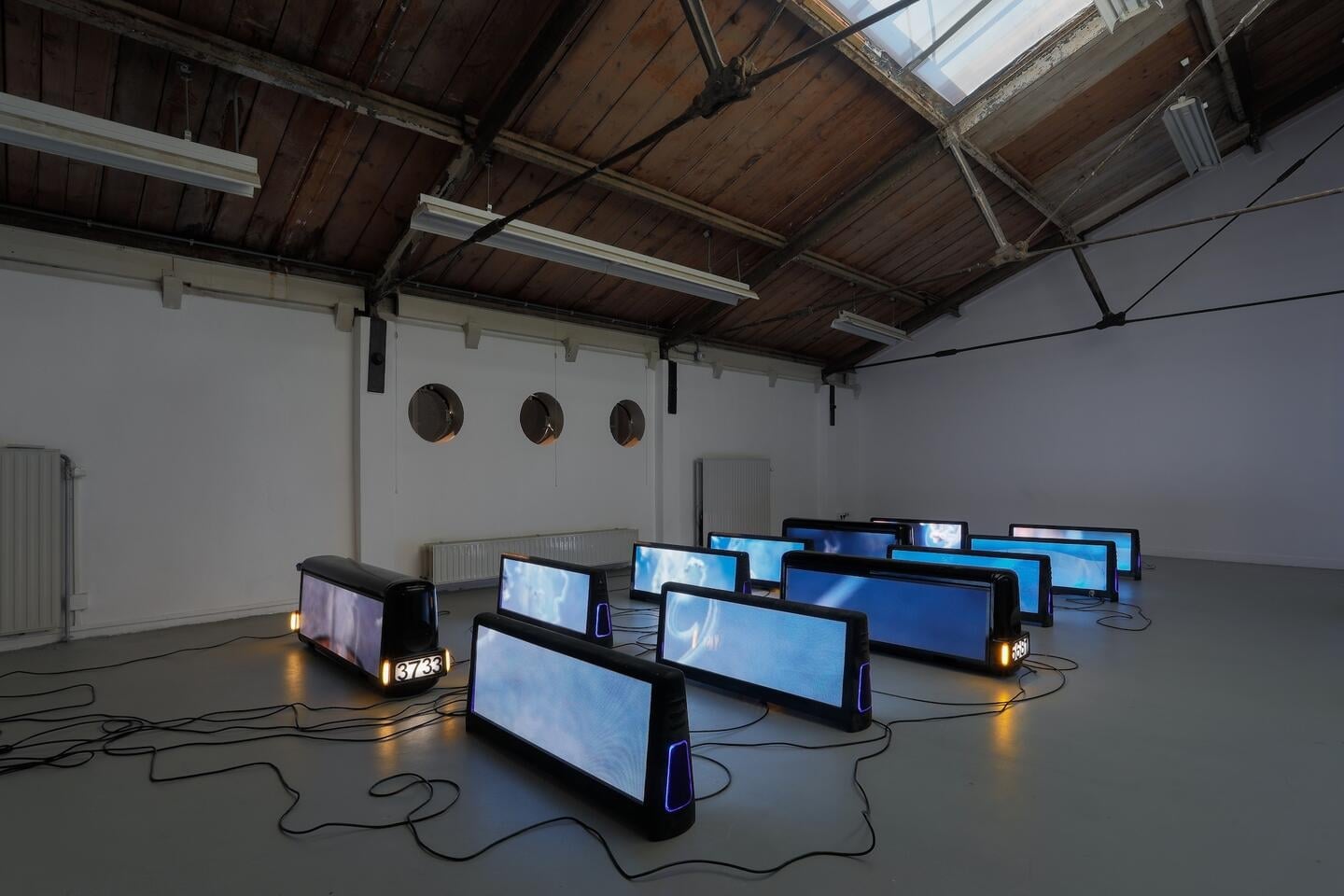
Jessica Wilson, Sweet Nothing, 2025–26. Repurposed LED taxi tops, mapping software and CG animation. Courtesy the artist and diez; image courtesy Frieze.
The strongest reason to begin in Focus is not that every younger gallery will produce a future blue-chip artist. It is that the section contains the highest concentration of programmes still defining themselves. Thirty-five galleries from seventeen countries participate this year, each no more than twelve years old. New exhibitors include 243 Luz & Co in London, Chemould CoLab in Mumbai, eastcontemporary in Milan, Ehrlich Steinberg in Los Angeles, Galerina in London, Linseed in Shanghai and Theta in New York.
That range matters. An art fair is most useful when it allows collectors to compare not only artists but ecosystems: which galleries are developing coherent programmes, which artists appear repeatedly in thoughtful institutional contexts, and which practices still feel capable of changing rather than merely reproducing a recognisable look.
Frieze’s own highlights show how varied the material is. Laurie Smith’s presentation with Wschód revisits the history of Huddersfield’s Gemini Club and the politics of queer gathering. Marcus Jefferson turns Harlesden High Street’s booth into a life-sized office installation. Maya Hewitt, presented by Theta, moves between painting and self-taught ceramic sculpture, while Jayeeta Chatterjee at Chemould CoLab works with woodcuts on recycled sari scrolls and Nakshi Kantha quilting.

Paul Robas, Long Story, 2026. Ink, encaustic and oil on board. Nominated by Louise Giovanelli for Artist-to-Artist and presented by Alice Amati. Photo: Roberto Apa. Courtesy Frieze.
Artist-to-Artist is one of the fair’s more useful devices because it makes advocacy explicit. Seven established artists nominate peers they believe deserve wider attention. The mechanism does not guarantee quality, but it does provide information that conventional booth selection often conceals: who artists themselves are watching.
The 2026 nominations include Jorge González Santos, chosen by Gala Porras-Kim; Eusung Lee, nominated by Ayoung Kim; Eilen Itzel do Espírito Santo, nominated by Firelei Báez; Jota Mombaça, selected by Otobong Nkanga; Unathi Mkonto, nominated by Yinka Shonibare; Caroline Monnet, chosen by Jeffrey Gibson; and Paul Robas, nominated by Louise Giovanelli.
For collectors, the right approach is not to treat the nominator’s reputation as a proxy for value. Instead, use the relationship as a starting point. Ask what one artist recognises in another: material intelligence, conceptual ambition, political urgency, formal risk or simply a way of working that is difficult to see through market categories.
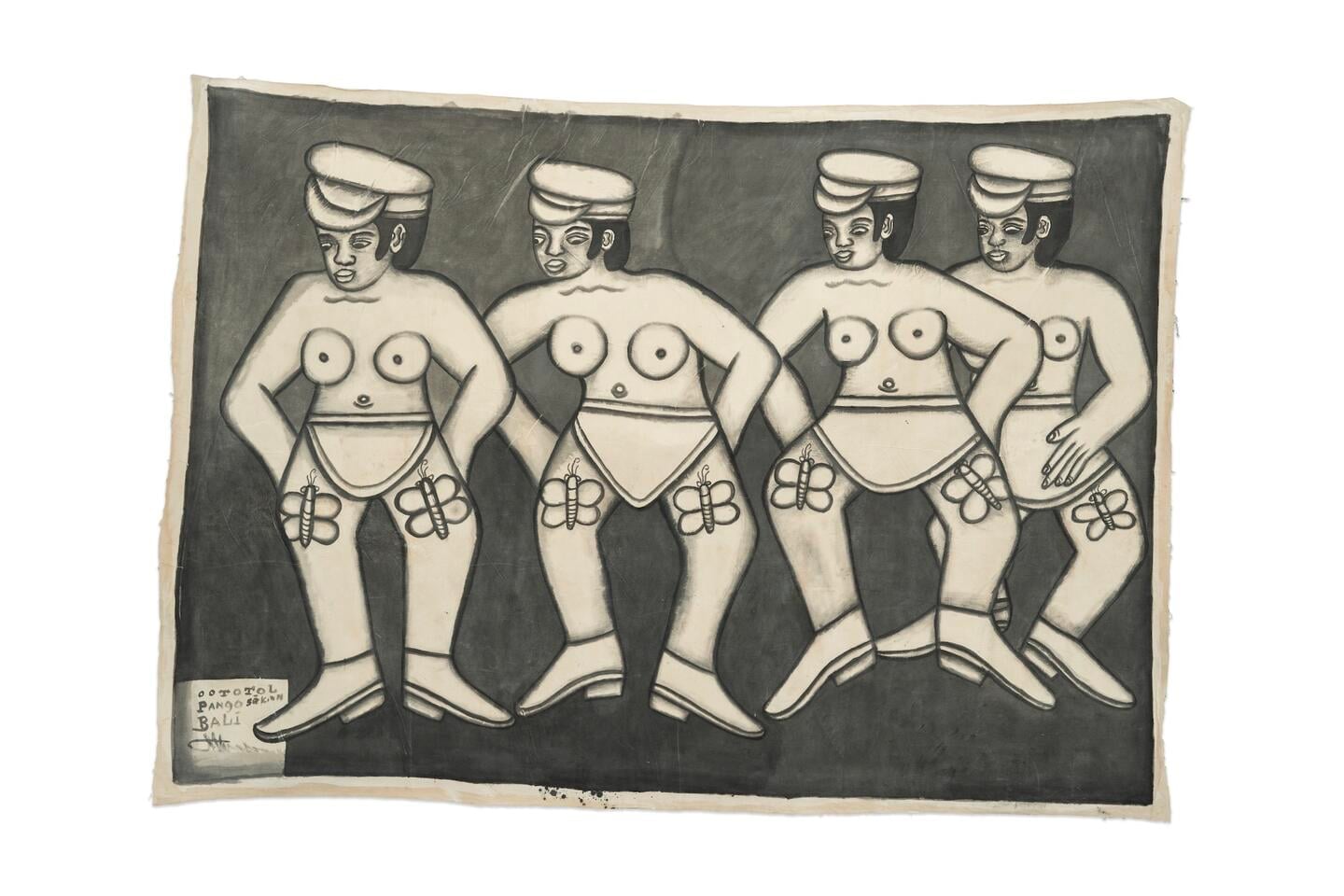
Oototol, Untitled, c.1990–2008. Chinese ink on canvas. Presented in The Code Universe by Valentine. Courtesy ROH and Frieze.
The new curated section, The Code Universe, is led by Carol Yinghua Lu and focuses on how artists respond to mass culture, popular imagery and systems of circulation from the late twentieth century to the present. That sounds broad, but the timing is precise. Collectors are now evaluating art in a visual environment shaped not only by photography, cinema and advertising but by TikTok, recommendation algorithms, machine-generated images and an endless stream of recycled cultural material.
The section includes work by Selma Selman, Shinro Ohtake, Carolyn Lazard, Oototol, Payne Zhu and others. The strongest presentations are likely to be those in which technology or popular culture is not merely a subject but a structural condition of the work. Payne Zhu’s real-time rendered installation, for example, behaves partly as a local apparatus and partly as a networked one. Oototol’s recurring uniformed figures use repetition to destabilise fixed identity rather than simply illustrating digital culture.
That distinction is worth carrying across the fair. Plenty of contemporary work refers to the internet. Far less work actually changes the terms of viewing because the internet exists.
Frieze Sculpture opened in September and remains in The Regent’s Park through 1 November. Its seven-week duration is useful because it allows collectors to see large-scale sculpture repeatedly, in weather, changing light and public circulation. That is a fundamentally different test from encountering a three-dimensional work under fair lighting for ten minutes.

Angel Otero, Dreams and Salt, 2025–26, Frieze Sculpture 2026. Presented by Hauser & Wirth. Photo: Linda Nylind. Courtesy Frieze.
Angel Otero’s Dreams and Salt, Conrad Shawcross’s Eye of the Needle and Ramesh Mario Nithiyendran’s Warrior Figure demonstrate three very different ways sculpture can negotiate the park: through architectural intervention, engineered repetition and figurative presence.
For anyone collecting sculpture for a garden, terrace or large domestic setting, these are not peripheral experiences. They are practical studies in scale, maintenance, sightline, grounding and the way an object behaves when there is no white wall to stabilise it.

Conrad Shawcross, Eye of the Needle (Time Pebble (E30A13)), 2026, Frieze Sculpture. Presented by Victoria Miro. Photo: Linda Nylind. Courtesy Frieze.
Collectors focused on contemporary art sometimes treat Frieze Masters as an optional historical supplement. In 2026 that misses the point. The fair’s most interesting sections are designed around re-reading art history: Spotlight foregrounds overlooked twentieth-century figures, Reflections constructs new dialogues across time, and Queering Modernism creates the fair’s first dedicated curatorial thread around queer visual history.
This matters because contemporary taste is rarely formed only by contemporary art. A serious collection becomes more coherent when collectors understand the histories artists are borrowing from, arguing with or refusing. Masters can therefore sharpen the eye for the contemporary fair next door.
The practical strategy is comparison. Instead of trying to “cover” both fairs, choose a question and follow it across them: how the body is represented, how artists use craft, how political histories enter abstraction, how domestic objects move into sculpture, how photography changes after digital circulation. The two tents become much more useful when treated as one research field.

Ramesh Mario Nithiyendran, Warrior Figure, 2026, Frieze Sculpture. Presented by Jhaveri Contemporary and Sullivan+Strumpf. Photo: Linda Nylind. Courtesy Frieze.
First, arrive with a shortlist but leave enough time to be wrong. The discovery sections exist precisely to interrupt prior knowledge. Second, photograph labels as carefully as artworks: artist, gallery, date, medium and price become much harder to reconstruct after the fair. Third, ask what else the gallery has done with the artist. A strong booth should lead to a stronger programme, not end at the booth.
Fourth, compare editions, unique works and materially ambitious pieces differently. A photograph, a ceramic installation and a welded-steel sculpture carry different questions of scarcity, conservation, storage and installation. Fifth, do not confuse sold-out with important. Fair momentum is information, but it is not judgement.
The best outcome from Frieze is not leaving with a list of the most talked-about booths. It is leaving with a more precise map of where your own curiosity should go next. In a week designed to accelerate decisions, the collector’s advantage is still the ability to slow the looking down.
Frieze London and Frieze Masters
The Regent’s Park, London
14–18 October 2026.
Frieze Sculpture remains on view through 1 November 2026.
Forget trying to see everything. Our collector’s guide to Frieze London and Frieze Masters identifies where discovery, scholarship and genuinely useful market intelligence are concentrated in 2026.
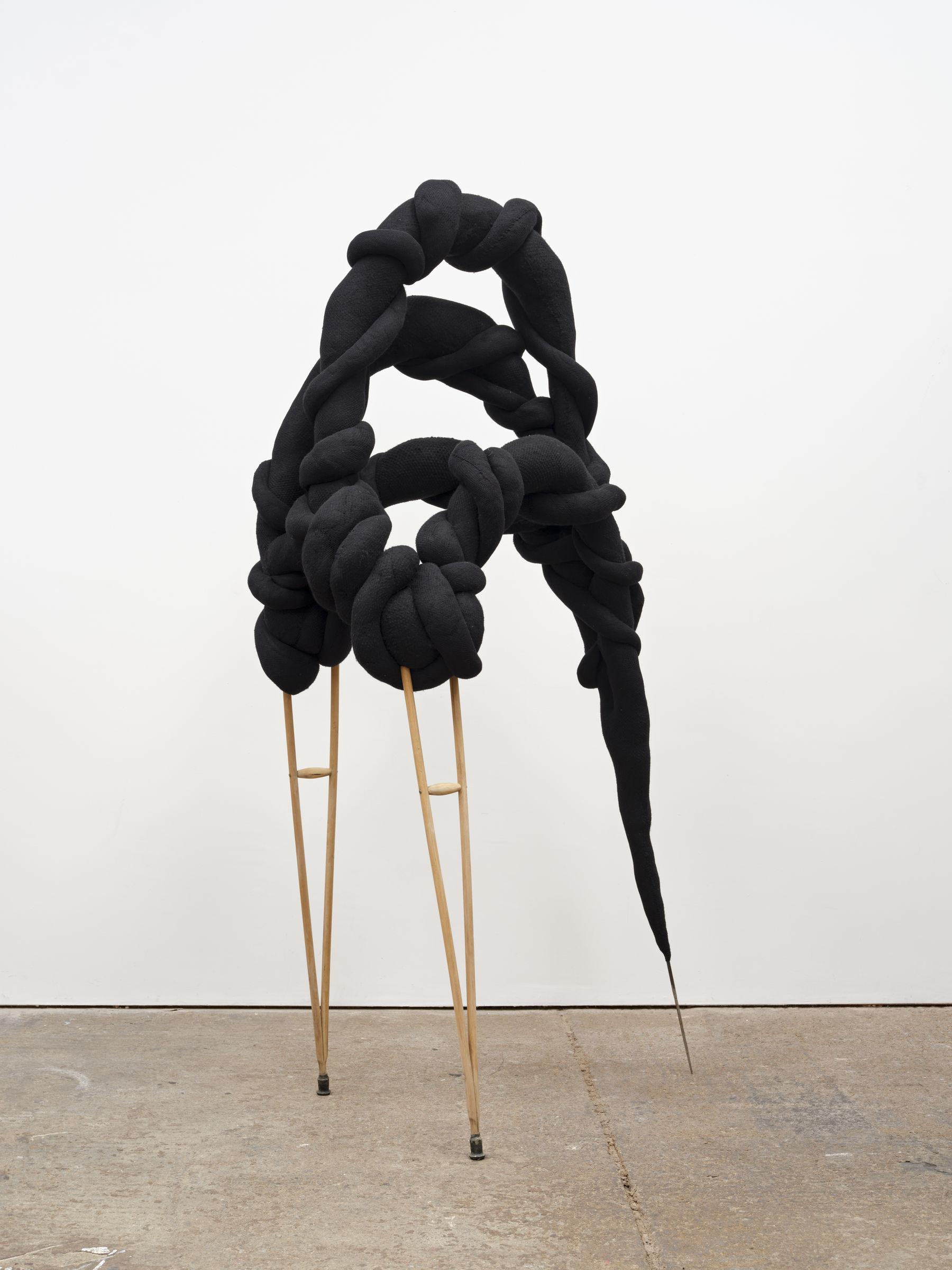
In I Tear Secrets From Your Yielding Flesh, Nicola Turner transforms wool, reclaimed horsehair and Hanover Square’s hidden histories into a persuasive, bodily sculpture installation.

At Gagosian New York, Jordan Wolfson gives circulating images physical weight, turning polished aluminium, reflection and spikes into a confrontation with screen culture.