
October 2, 2026
Articles
Articles
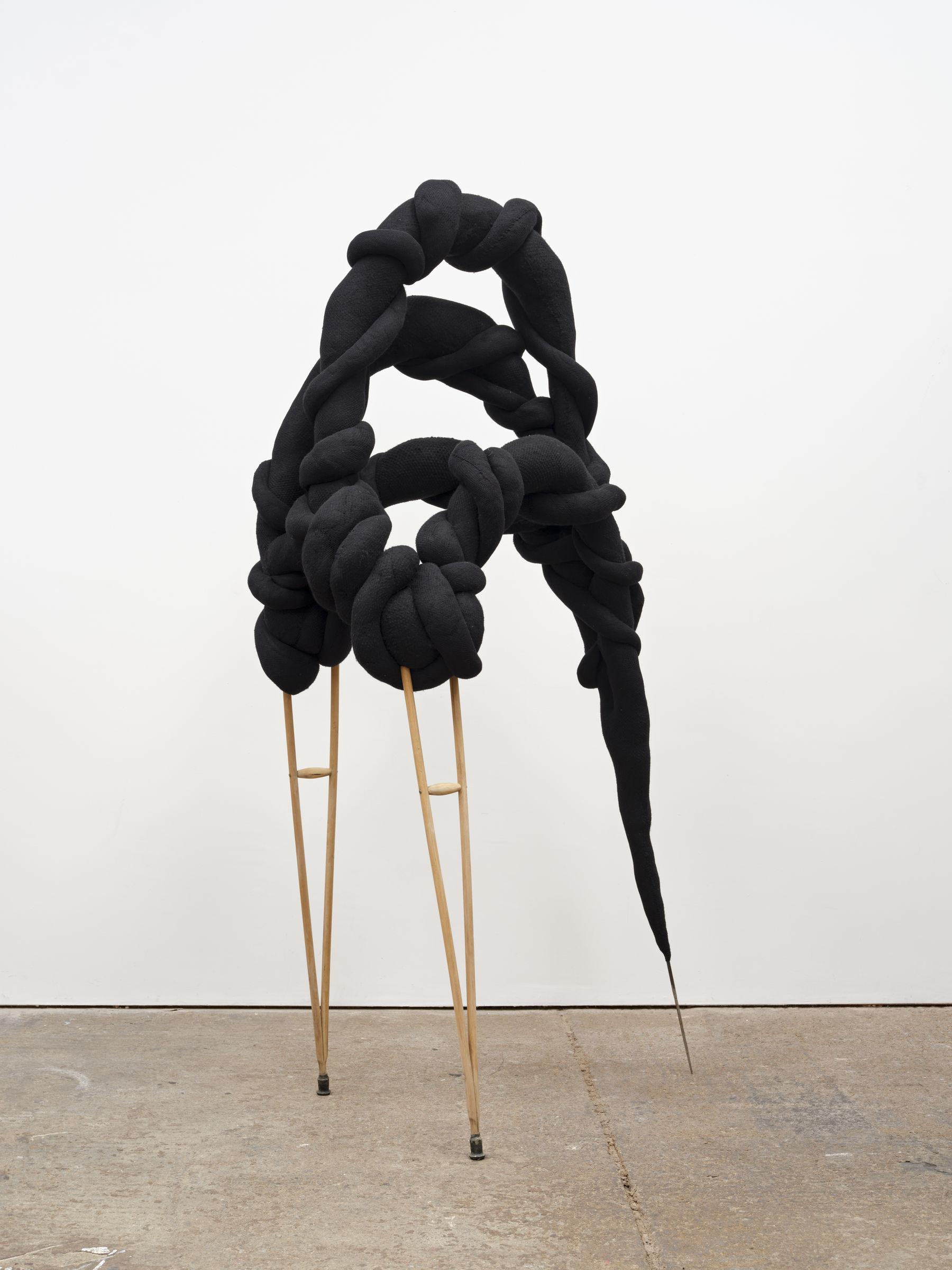
In I Tear Secrets From Your Yielding Flesh, Nicola Turner transforms wool, reclaimed horsehair and Hanover Square’s hidden histories into a persuasive, bodily sculpture installation.
In I Tear Secrets From Your Yielding Flesh, Nicola Turner transforms wool, reclaimed horsehair and Hanover Square’s hidden histories into a persuasive, bodily sculpture installation.
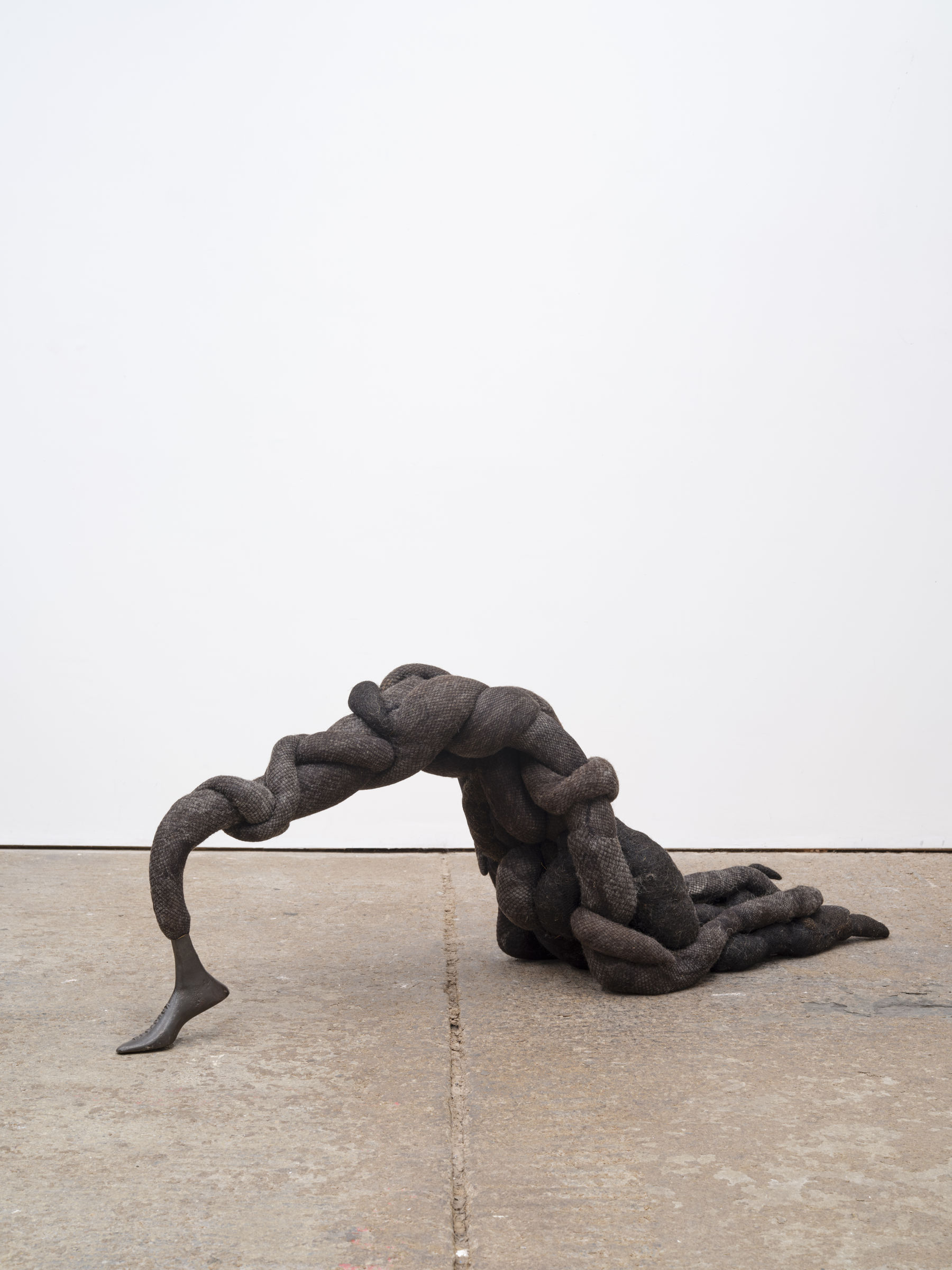
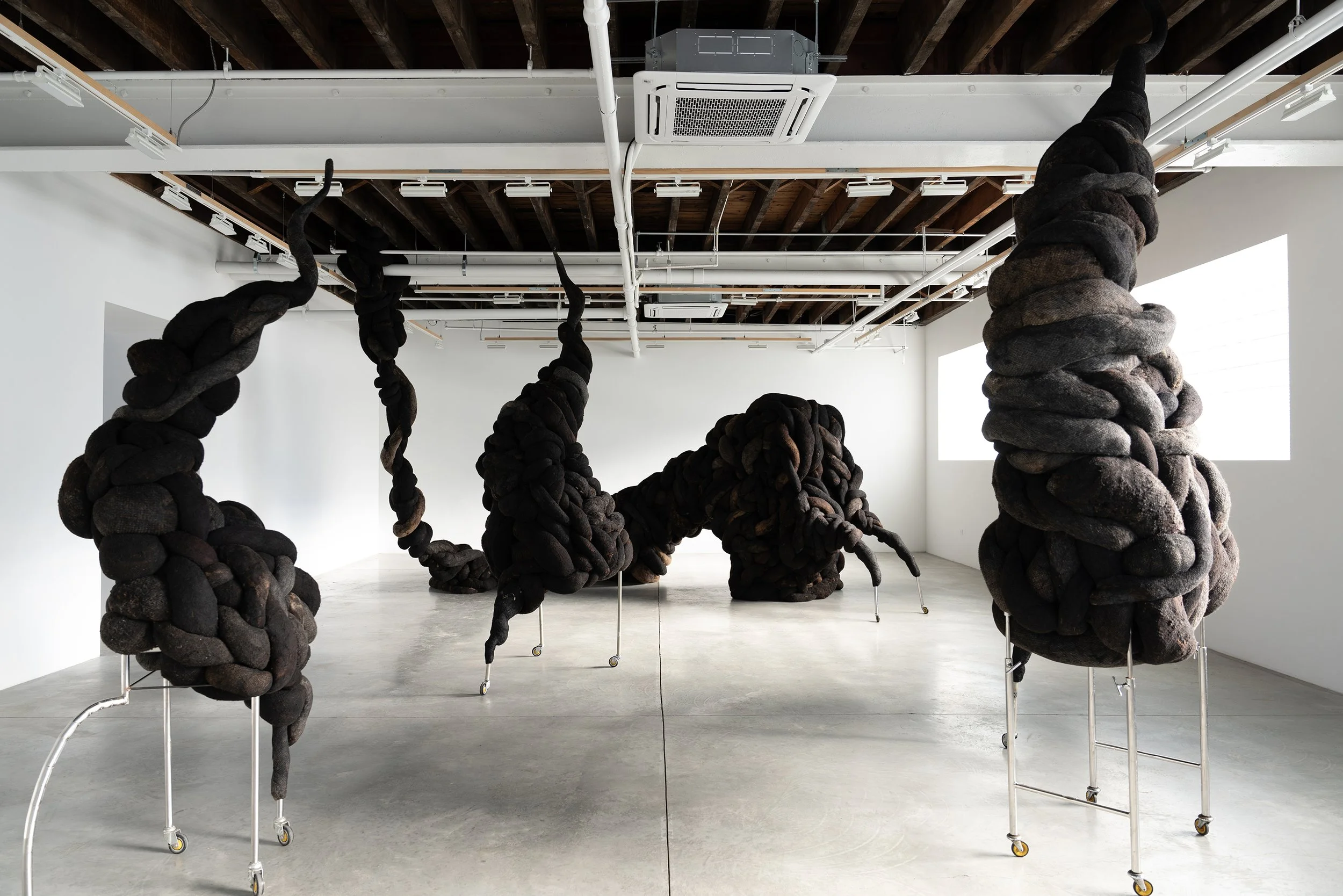
Nicola Turner’s first solo exhibition with Annely Juda Fine Art begins with a material that seems to remember being alive. Wool and reclaimed horsehair accumulate into dark, swollen bodies that hang, lean and teeter through 16 Hanover Square. They are unmistakably sculptures, yet they never settle comfortably into the category. At moments they resemble animals, garments, organs, furniture, specimens or pieces of architecture learning to move.
I Tear Secrets From Your Yielding Flesh, on view through 7 November, is a site-responsive installation built around the history of Annely Juda’s Grade II-listed Georgian townhouse. Turner uses that history without turning the exhibition into illustration. Instead, the building becomes a pressure system: chemistry, dye, dressmaking, secrecy, shame and female biography pass through the materials until the works feel less like objects placed in a room than things that have absorbed it.
The exhibition’s historical structure is unusually rich. In 1845, August Wilhelm von Hofmann established the Royal College of Chemistry on the site at Prince Albert’s request. One of Hofmann’s students, William Henry Perkin, would accidentally discover the first commercially successful synthetic purple dye while attempting to synthesise quinine. The accident changed colour from a marker of scarcity into something that could circulate through industrial production.
Decades later, the address became associated with dressmaking. Reville & Rossiter operated from 15–16 Hanover Square in the early twentieth century, held a Royal Warrant, produced Queen Mary’s coronation robe and, after the death of Edward VII, dyed stock black in response to mourning. Vita Sackville-West’s wedding dress was made there in 1913. Turner draws these histories together not as anecdotes but as systems through which bodies are disciplined, adorned, concealed and socially read.
The exhibition title comes from a line in an erotic poem Sackville-West wrote to Violet Trefusis in 1918, a text that remained hidden for decades. That connection could easily have pushed the show toward overdetermined symbolism. Turner avoids the trap because the materials remain obstinately physical. Horsehair does not become a neat metaphor for memory; it tangles, collapses, bulges and resists.
This is the exhibition’s great strength. Turner does not sculpt literal bodies. She constructs conditions in which the viewer cannot stop imagining them. A mass of wool becomes torso-like because it seems to carry weight. A tripod or pair of dressmaker’s shears becomes leg-like because the sculpture appears precariously balanced. A protruding element can read as limb, probe or piece of furniture hardware depending on where one stands.
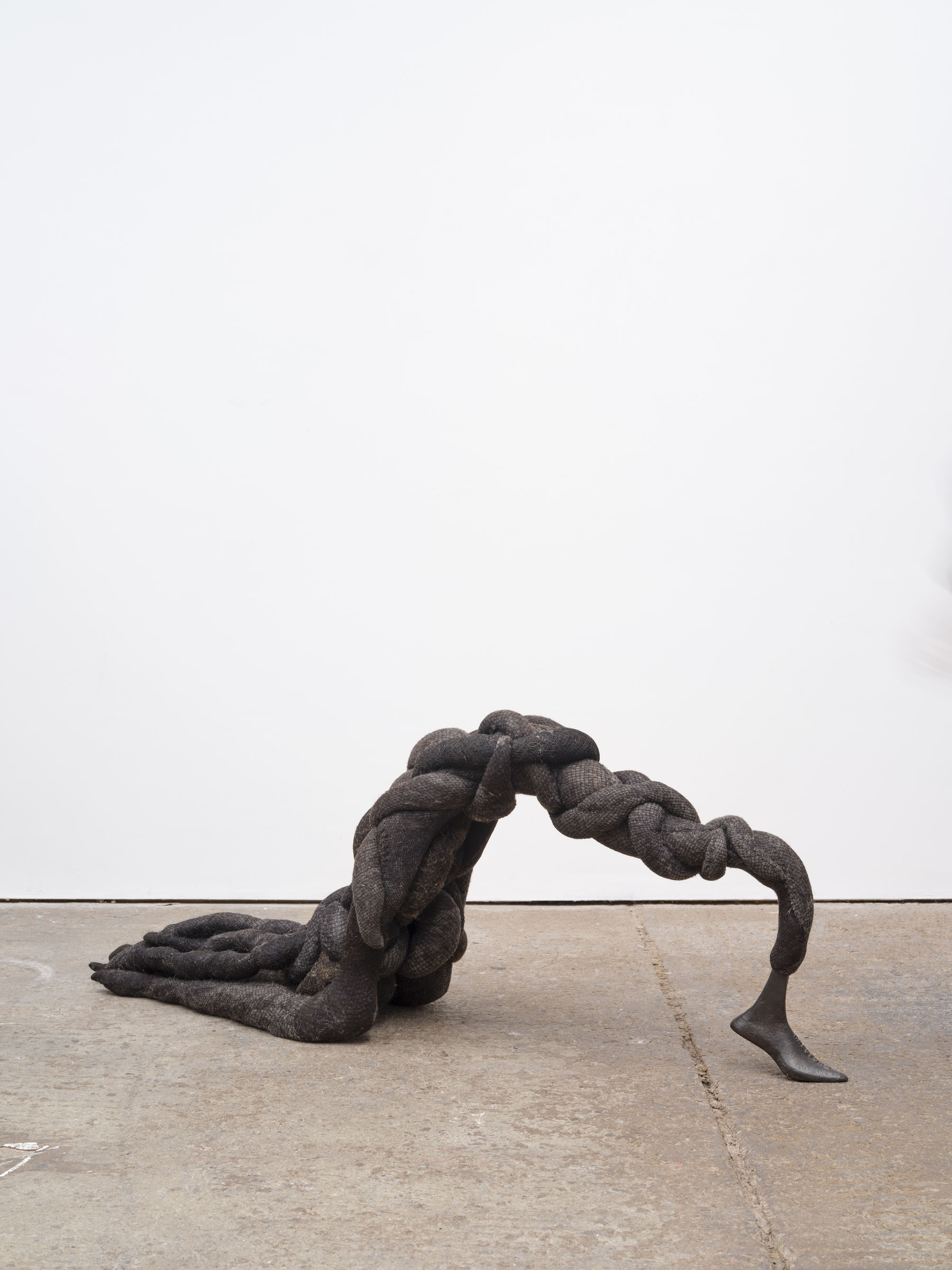
Best Foot Forward is exemplary. The work’s dark wool and horsehair mass has a creaturely density, yet its steel support system introduces a different register: tailoring, medical apparatus and display all seem possible. The elegance comes from instability. The work looks capable of movement even when it is completely still.
Turner’s background in set and costume design matters here, but not because the installation feels theatrical in a superficial sense. She understands how an object acquires meaning through proximity, height, entrance, sightline and anticipation. The gallery becomes choreographed without becoming stagey. A sculpture encountered from the side can feel entirely different when seen from the staircase or through another form.
Turner has repeatedly worked with reclaimed horsehair from old mattresses. It is difficult to imagine a more materially loaded substance. Hair is bodily but detachable; mattress stuffing is domestic but hidden; old bedding carries the possibility of touch without preserving any legible record of the people who used it. Turner does not claim to retrieve those histories. She works with the fact that they cannot be retrieved.
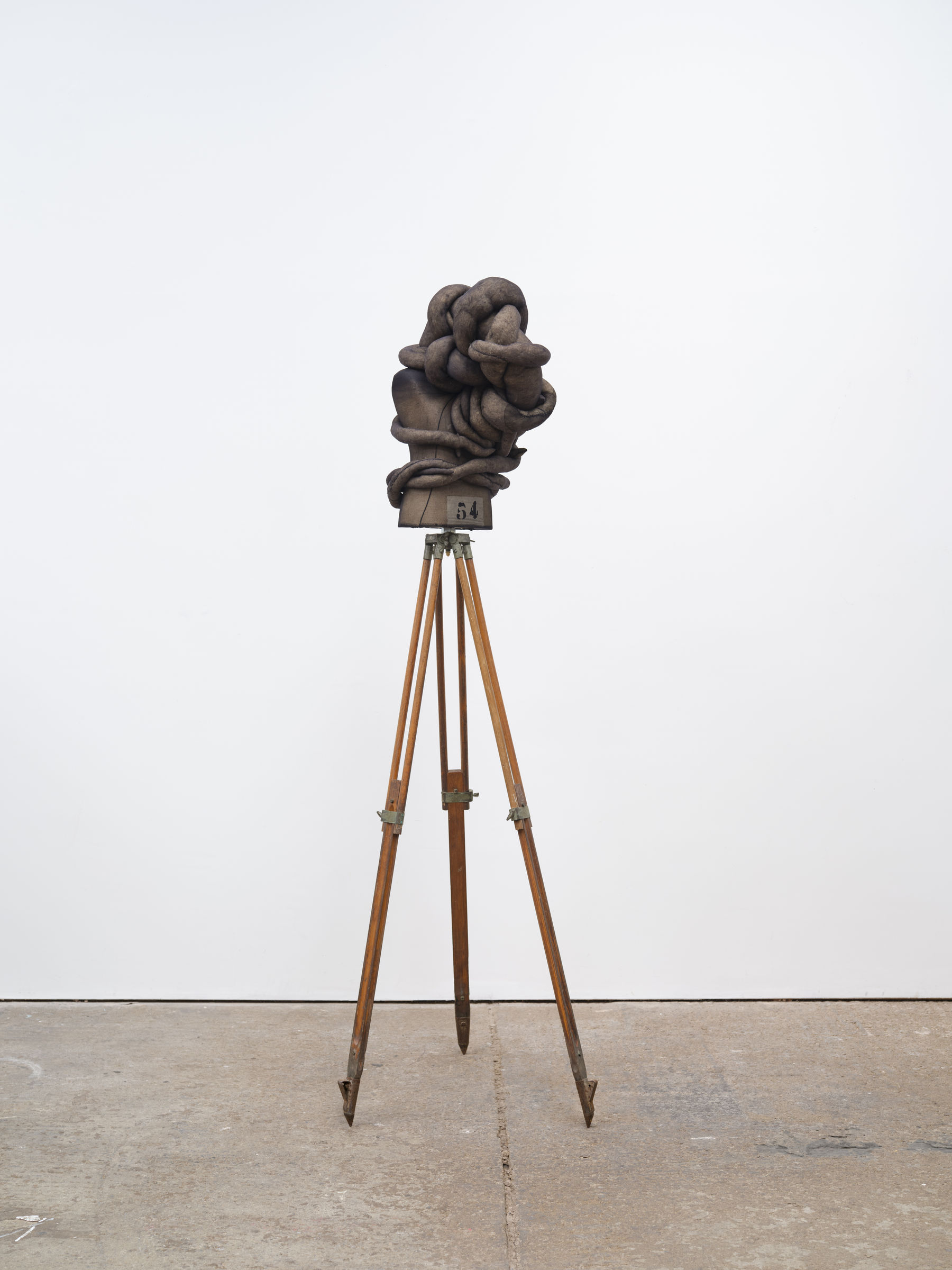
That distinction protects the work from nostalgia. Salvaged material can be fetishised simply because it is old. Turner is more interested in its uncertainty. The wool and hair absorb, conceal and refuse. Their dark colour can suggest mourning, dirt, animal hide or the interior of a garment, but none of those readings closes the work.
In Internalized Gaze, the presence of a mannequin makes the relation to the body more explicit without making it easier. Mannequins are bodies stripped of biography and used to organise desire. Turner entangles that blank commercial form with wool, wood and steel until it seems less like a stand-in for a person than a body under pressure from everything projected onto it.
The exhibition repeatedly touches ideas of female shame, secrecy and bodily intrusion. Even the Latin root often connected with pudendum carries the historical entanglement between female anatomy and the instruction to be ashamed or modest. Turner does not treat that inheritance as a closed historical problem. Her sculptures are full of concealment, but they are not passive.
They take up space. They project outward. They make the viewer negotiate around them. The façade intervention, climbing twelve metres up the building, is important for the same reason. Material associated with interiors and upholstery escapes the room and becomes public architecture.
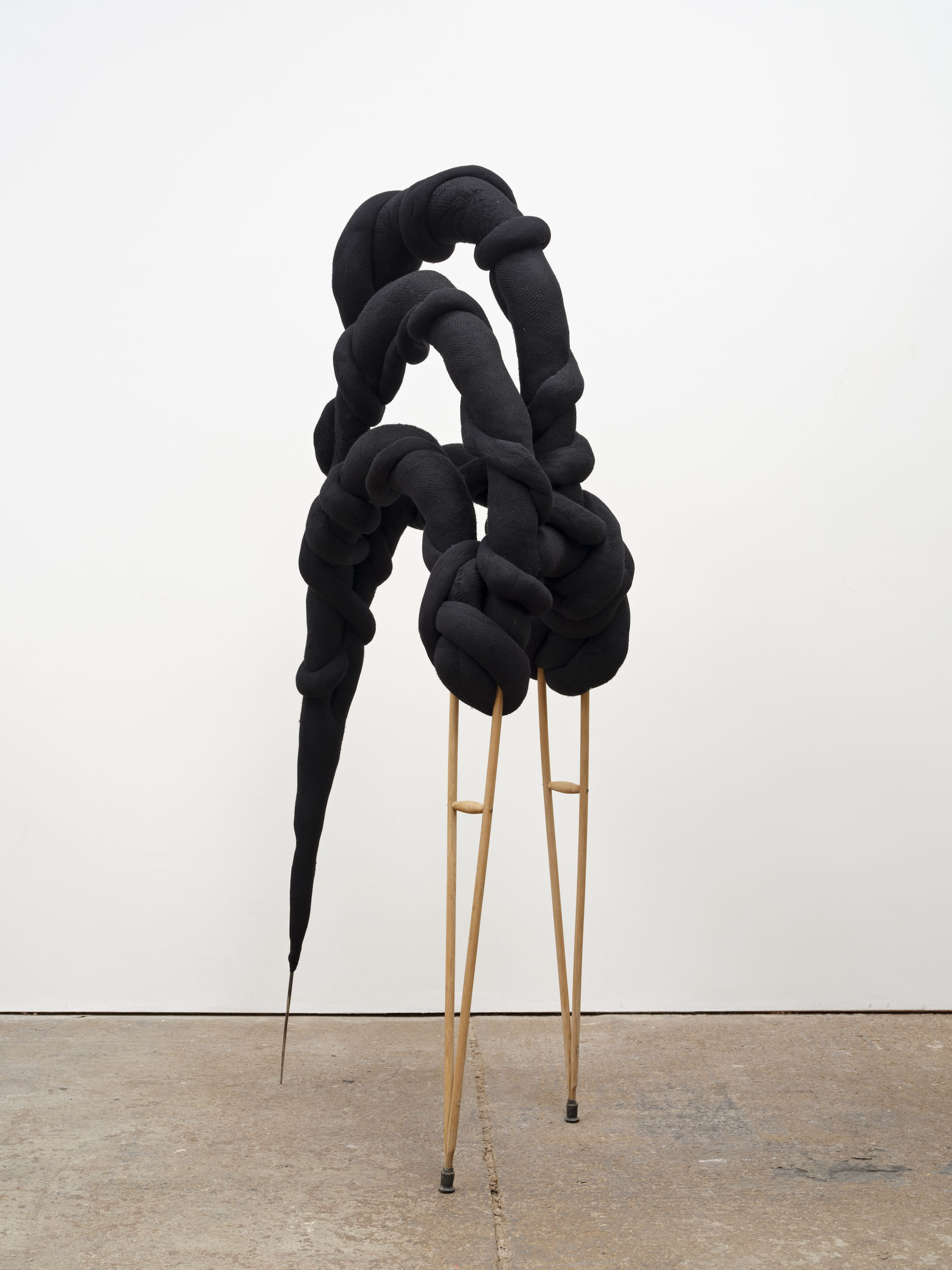
That is why the exhibition feels affirmative despite its darker subjects. Loss, secrecy and bodily vulnerability are present, but the work is not trapped by them. The forms continue growing. Threads are joined. Found supports acquire new purposes. Material that once belonged inside furniture or bedding becomes visible and structurally assertive.
There is a risk in work this materially dramatic: atmosphere can overpower specificity. Turner largely avoids it. The individual sculptures retain enough formal distinction that the installation does not collapse into a single gothic mood. Hidden Mother has a different psychological temperature from Best Foot Forward; Internalized Gaze introduces a colder encounter with the mannequin; smaller works make the language more intimate.
The exhibition documentation also makes clear how dependent the work is on space. That dependence should not be understood as a weakness. Site-responsive sculpture is often strongest when it admits that display is part of meaning. The collector’s question is therefore not “can this be separated from Hanover Square?” but “what instructions, relationships and tolerances are necessary for it to remain itself elsewhere?”
Anyone acquiring Turner's work should pay close attention to installation documentation, permitted configurations, support structures and conservation. Wool, horsehair, wood, steel and salvaged components age differently. A good condition report should distinguish inherent irregularity from later damage. Photographic records of the work as installed are particularly important where orientation and spatial relation are integral.
Those practical questions are not separate from the art. Turner's sculptures are compelling because they make material history visible without pretending it can be stabilised. Conservation inevitably enters into that conversation: how much change belongs to the life of the material, and when does change alter the work?
I Tear Secrets From Your Yielding Flesh succeeds because the research never becomes more important than the sculptures. Perkin, Sackville-West, mourning dress, synthetic dye and the history of Hanover Square supply a charged field, but Turner ultimately trusts material to do the work.
The result is a confident exhibition in which softness becomes structural, domestic residue becomes monumental and secrecy acquires a physical weight. Turner’s forms are strange enough to resist immediate categorisation and precise enough to reward sustained looking. That combination—seductive, awkward, bodily and intellectually grounded—makes this more than a strong first solo exhibition with Annely Juda. It makes a persuasive case for Turner as a sculptor whose work can expand without losing its intimacy.
Nicola Turner: I Tear Secrets From Your Yielding Flesh
Annely Juda Fine Art, 16 Hanover Square, London
1 October–7 November 2026.
In I Tear Secrets From Your Yielding Flesh, Nicola Turner transforms wool, reclaimed horsehair and Hanover Square’s hidden histories into a persuasive, bodily sculpture installation.

At Gagosian New York, Jordan Wolfson gives circulating images physical weight, turning polished aluminium, reflection and spikes into a confrontation with screen culture.
Christie’s reveals the late Clive Davis’s private collection, from Warhol and Hockney to Stella and Mitchell—and the discerning eye behind a lifetime of collecting.