
November 3, 2026
Articles
Articles

The new Dasha Shenkman Focus Fund has placed three Okiki Akinfe works into Abbot Hall. Its real significance is a model of private patronage that creates public institutional value early.
At Palazzo Venier dei Leoni in Venice, Peggy Guggenheim made modern art part of daily life—and left a model for the home as a living collection.
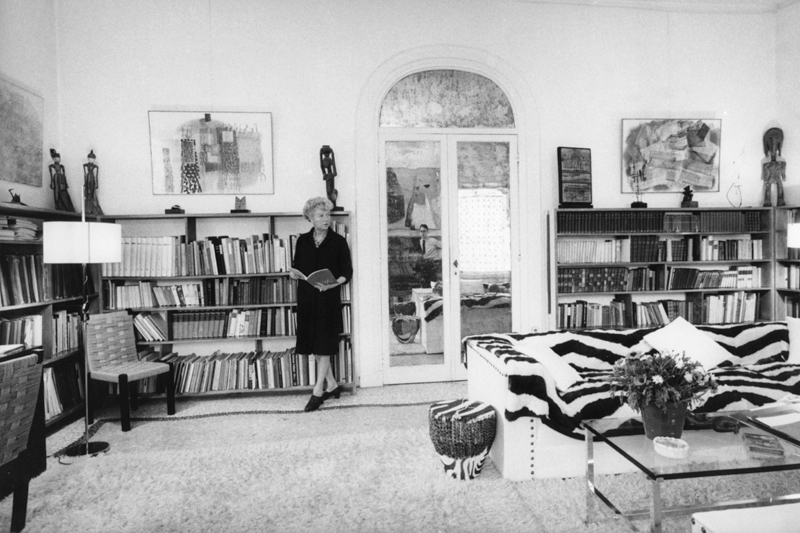
The most persuasive collector’s home is rarely the one that looks most like a museum. It is a place in which the collection has acquired a lived rhythm: works are encountered at different hours, objects are arranged for conversation rather than for an auction catalogue, and the architecture leaves traces of the person who assembled everything. Few homes demonstrate this better than Palazzo Venier dei Leoni, the unfinished palace on Venice’s Grand Canal in which Peggy Guggenheim lived from 1949 until her death in 1979.
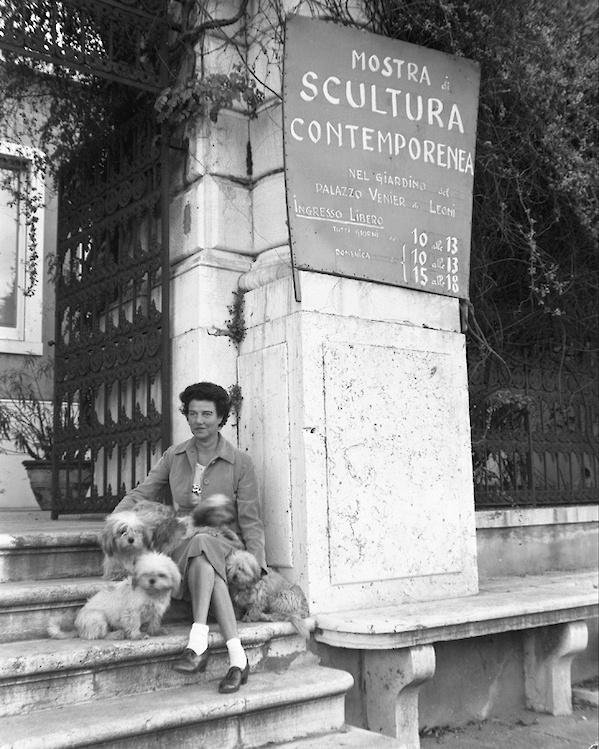
Today the Palazzo houses the Peggy Guggenheim Collection, one of the enduring destinations for modern art in Europe. But before it became a museum, it was a home animated by an unusually courageous collector. Its significance is not that Guggenheim acquired the most famous names. It is how she brought paintings and sculpture into the texture of everyday life, transforming a modestly proportioned Venetian building into a place where art, friends, dogs, artists and visitors moved through a shared world.
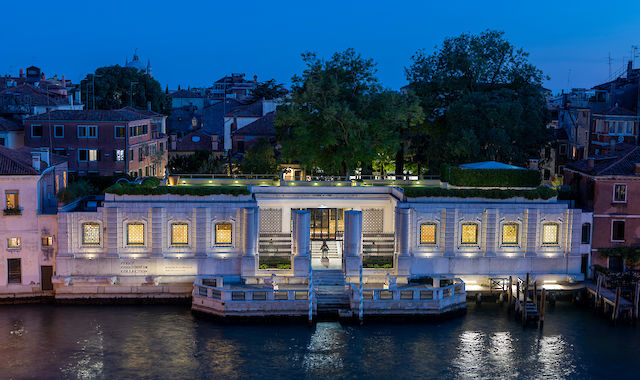
The Palazzo Venier dei Leoni was planned in the eighteenth century for the Venier family, with a design traditionally associated with Lorenzo Boschetti. Only the low, single-storey structure was completed, leaving the building strikingly unlike the tall palazzi that line much of the Grand Canal. That interruption became one of its most fortunate qualities. Rather than overwhelming an interior with ceremonial scale, it offered rooms and a garden capable of sustaining an unusually intimate dialogue between painting, sculpture and daily life.
Guggenheim bought the building in 1949, the year after she presented her collection at the Venice Biennale. Its long horizontal profile, position beside the water and relationships between domestic rooms and outdoor space made it well suited to her way of living with art. The palace was not a neutral container. It helped determine how modern pictures could be encountered: not as an encyclopaedic sequence but as presences sharing an inhabited environment.
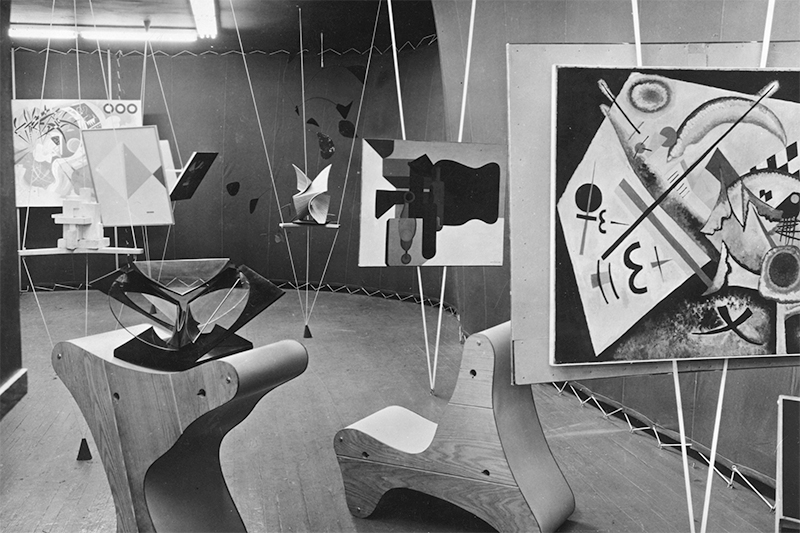
Guggenheim’s approach to the home was inseparable from her experience as a gallerist and advocate. In London she opened Guggenheim Jeune in 1938. In New York she founded Art of This Century in 1942, with exhibition spaces designed by Frederick Kiesler. These projects were attempts to give unfamiliar artistic languages a place to be seen and debated, often before wider consensus had formed around their importance.
The New York gallery is a particularly revealing precedent for Venice. Kiesler’s radical interiors challenged conventions of display and treated the visitor’s encounter with a painting as an active physical event. Such an attitude informed Guggenheim’s later willingness to place avant-garde work in a domestic context without requiring it to appear remote or solemn. Even when the settings became more personal, the experience of looking remained central.
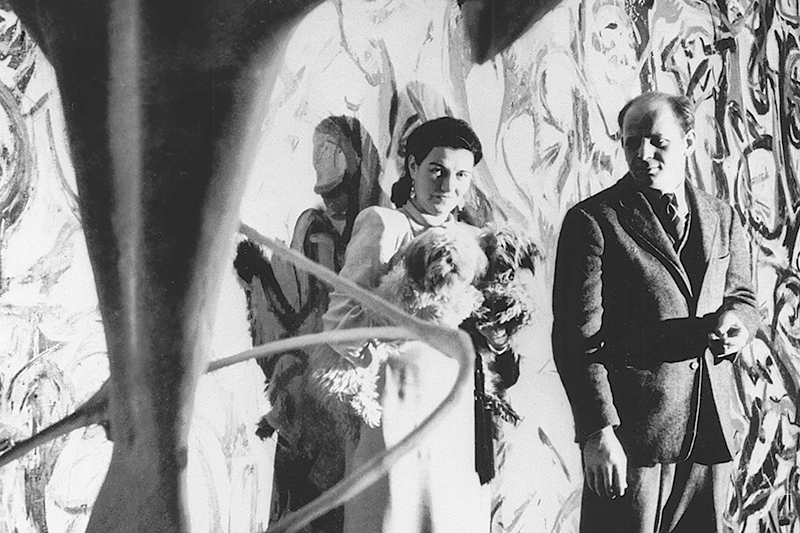
Peggy Guggenheim’s role in Jackson Pollock’s career illustrates the difference between simply purchasing art and helping create the circumstances in which it can be made. She gave Pollock early attention, presented his work and supported a moment of American painting whose ultimate historical importance could not have been certain in advance. The commission of Mural is among the most famous reminders of that support.
For contemporary collectors the lesson is not to search for the next guaranteed star. It is that a meaningful collection may take shape through sustained engagement with artists and through decisions that remain uncertain at the time they are made. Guggenheim’s proximity to the development of modern art was not incidental; she placed herself in the arguments, friendships and risks through which new art entered public life.
Images of Guggenheim moving through Venice by gondola have become almost inseparable from her public persona, but the essential architecture of her life was the Palazzo itself. The garden made sculpture part of a lived landscape rather than an isolated indoor exhibit. The canal changed the quality of light entering the rooms. And the domestic scale kept the collection in a form of conversation with the person who had assembled it.
This is a useful challenge to the contemporary tendency to design collector homes around a succession of spectacular views. A strong interior need not be an endless series of feature walls. It can allow for quiet passages, oblique sightlines and objects placed where repeated encounters will deepen their meaning. Artworks may become more present through living alongside them than through continuously announcing their value.
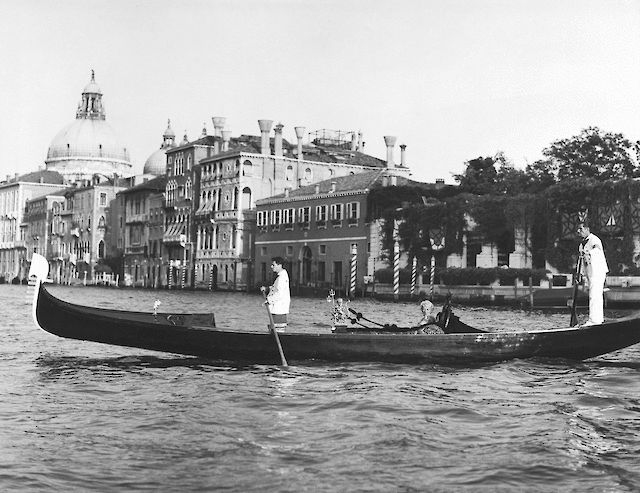
Guggenheim began opening the Palazzo and its collection to the public in 1951, initially on selected afternoons. What had been a private project was gradually becoming an institution. In 1970 she gave the building to the Solomon R. Guggenheim Foundation; in 1976 she donated her collection. Following her death in 1979, the Foundation continued the task of caring for the site and its works, and the museum has operated under its auspices since 1980.
Those decisions matter because the future of a collection is not automatically secured by the quality of the objects. There are questions of conservation, legal structure, access, interpretation and the changing environment around a work. A collector may spend a lifetime refining an arrangement, but the arrangement needs institutional knowledge if it is to survive and remain meaningful beyond its maker.
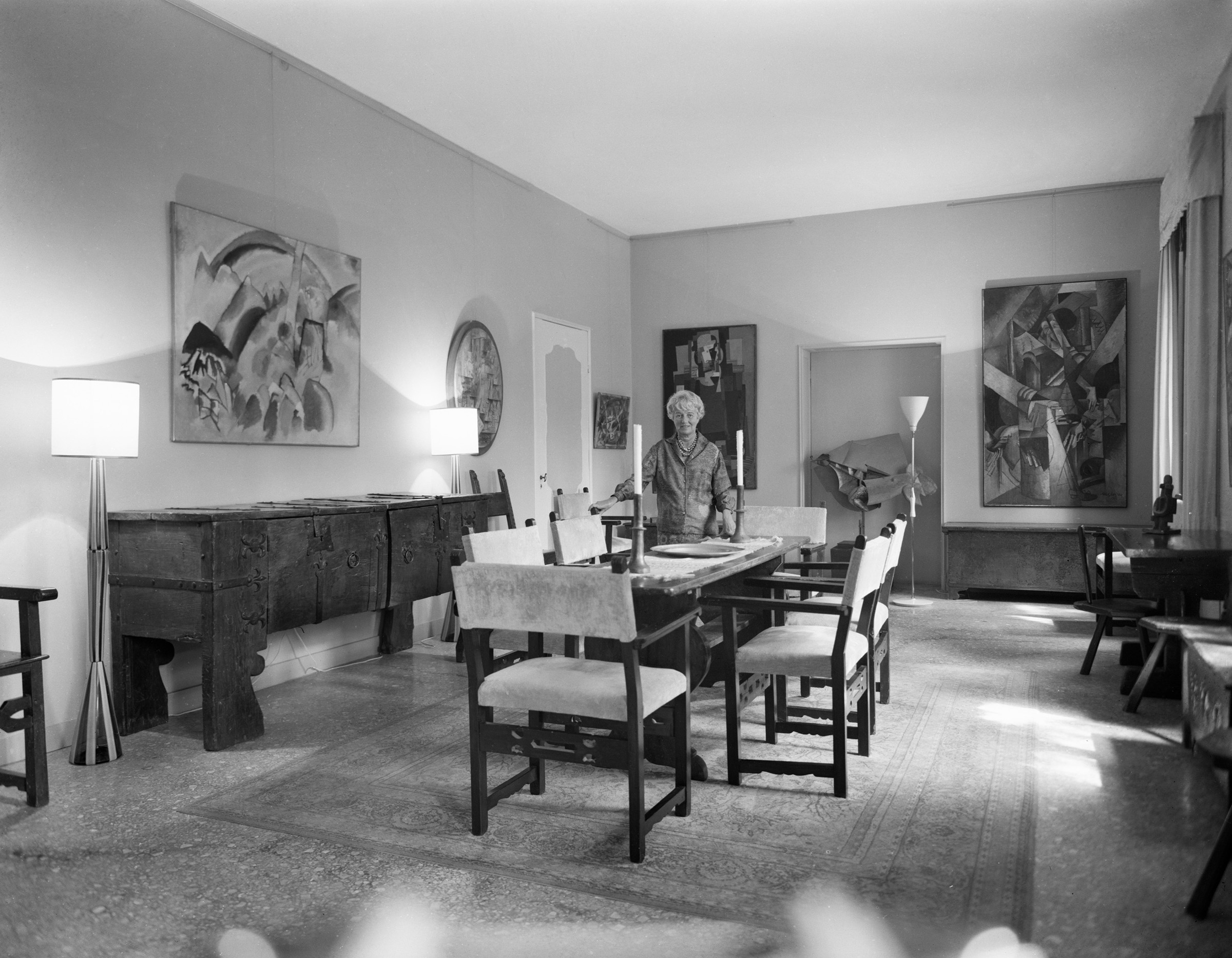
A historic photograph of Guggenheim’s dining room makes the lesson tangible. A painting by Kandinsky and works by Braque, Balla, Boccioni and other modernists share walls with functional furniture, lamps and chairs: the room is not a prescribed sequence of viewing stations. Each work retains its autonomy while becoming part of a private pattern of looking, returning and living. In the museum today the furniture and hanging have necessarily evolved, but the spatial question remains the same: how can a collection preserve its individuality without making every room feel like an institution?
The Palazzo makes a distinctive argument for the relationship between high modernism and domestic life. Pictures associated with Surrealism, Cubism and Abstract Expressionism can be seen within spaces whose proportions are generous without being overwhelming. The experience has an intimacy that a purpose-built museum gallery often cannot imitate. Walking through the house becomes an encounter with a particular history of taste, curiosity and risk.
Yet a successful collector interior should not be measured by how faithfully it recreates Guggenheim’s world. The more transferable principle is her independence. She collected within a network of friendships and conversations, chose work that carried real conviction for her, and accepted that a home would change as the collection evolved. There is room for bold contrast as well as harmony, for experiment as well as settled masterpieces.
The transition from private residence to museum also leaves complex questions around conservation and interpretation. Domestic environments are built for changing habits, sun, movement and improvisation; collections demand stewardship, documentation and controlled conditions. The preservation of a collector’s sensibility therefore requires more than freezing rooms at a single date. It calls for distinguishing original arrangements, later curatorial decisions and the changing demands of public access. That distinction gives the palazzo a depth beyond its appeal as an atmospheric backdrop for exceptional objects.
One of the most interesting questions for today’s art-filled houses is what happens after the original collector is no longer there. Collections may be dispersed, inherited, lent, donated or supported by foundations. None of those outcomes is inherently right for everyone. The important point is to make deliberate choices early enough that the artistic and personal stories remain intelligible to the next custodians.
Palazzo Venier dei Leoni is exceptional partly because its double identity remains visible. It is a major cultural destination and, at the same time, recognisably the home of the person who built the collection. The artworks continue to move between public history and private memory. This tension gives the museum its particular emotional charge.
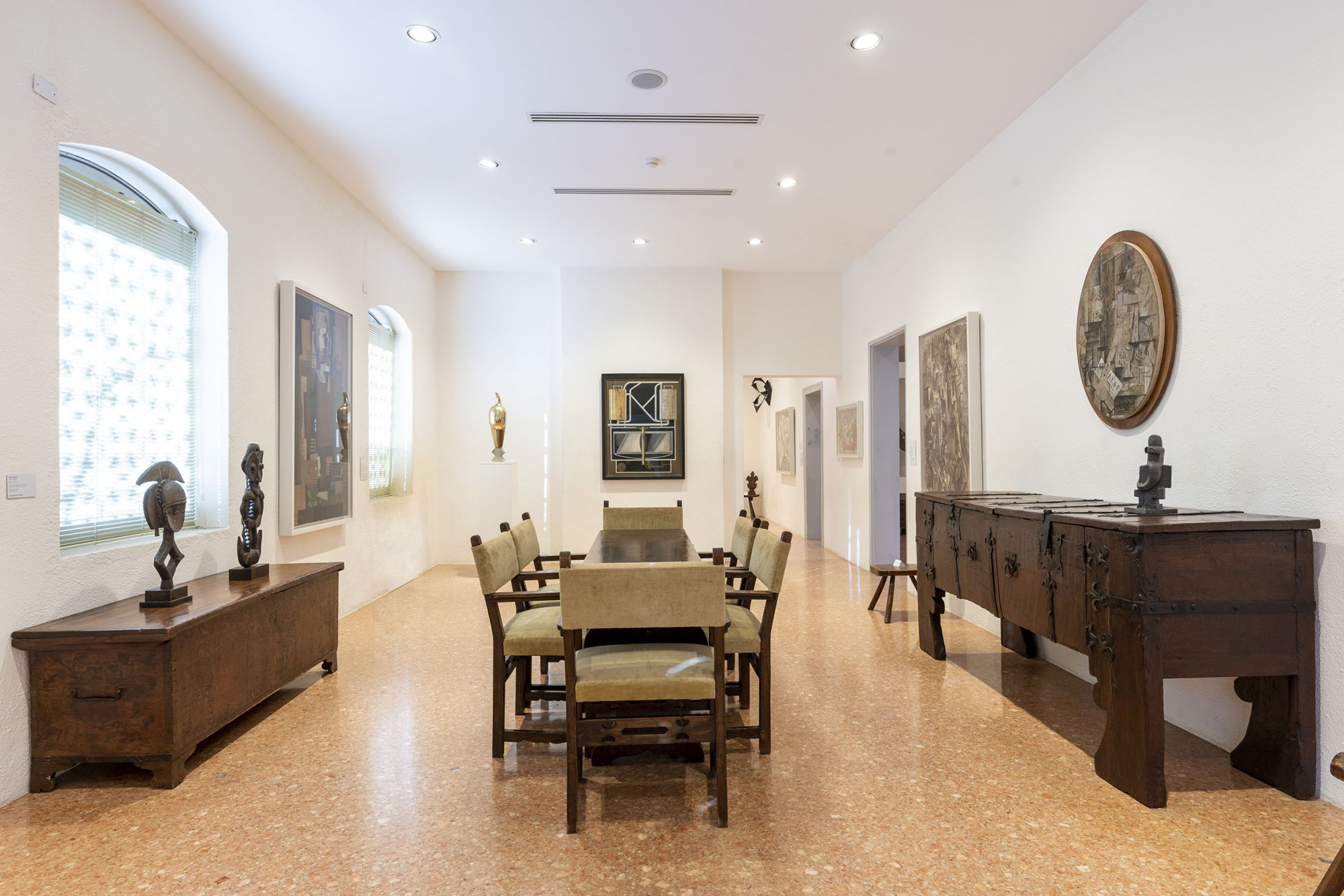
Peggy Guggenheim’s Venetian home is a compelling case study for anyone interested in the relationship between contemporary collecting and architecture. Its lesson does not lie in replication, nor in the fantasy that every important work requires a grand room. It lies in the conviction that the collection should inform a way of life and that the place in which art is encountered can become part of its story. The house succeeds because the art never feels like a collection assembled to impress an absent audience; it feels like the expression of a person willing to commit to what she saw.
For collectors commissioning or renovating a home today, that may be the most valuable design brief of all: provide the light, circulation and conservation conditions the works require, but leave enough space for individuality, memory and the unexpected. A home full of art should remain, unmistakably, a home.
The new Dasha Shenkman Focus Fund has placed three Okiki Akinfe works into Abbot Hall. Its real significance is a model of private patronage that creates public institutional value early.
At Palazzo Venier dei Leoni in Venice, Peggy Guggenheim made modern art part of daily life—and left a model for the home as a living collection.
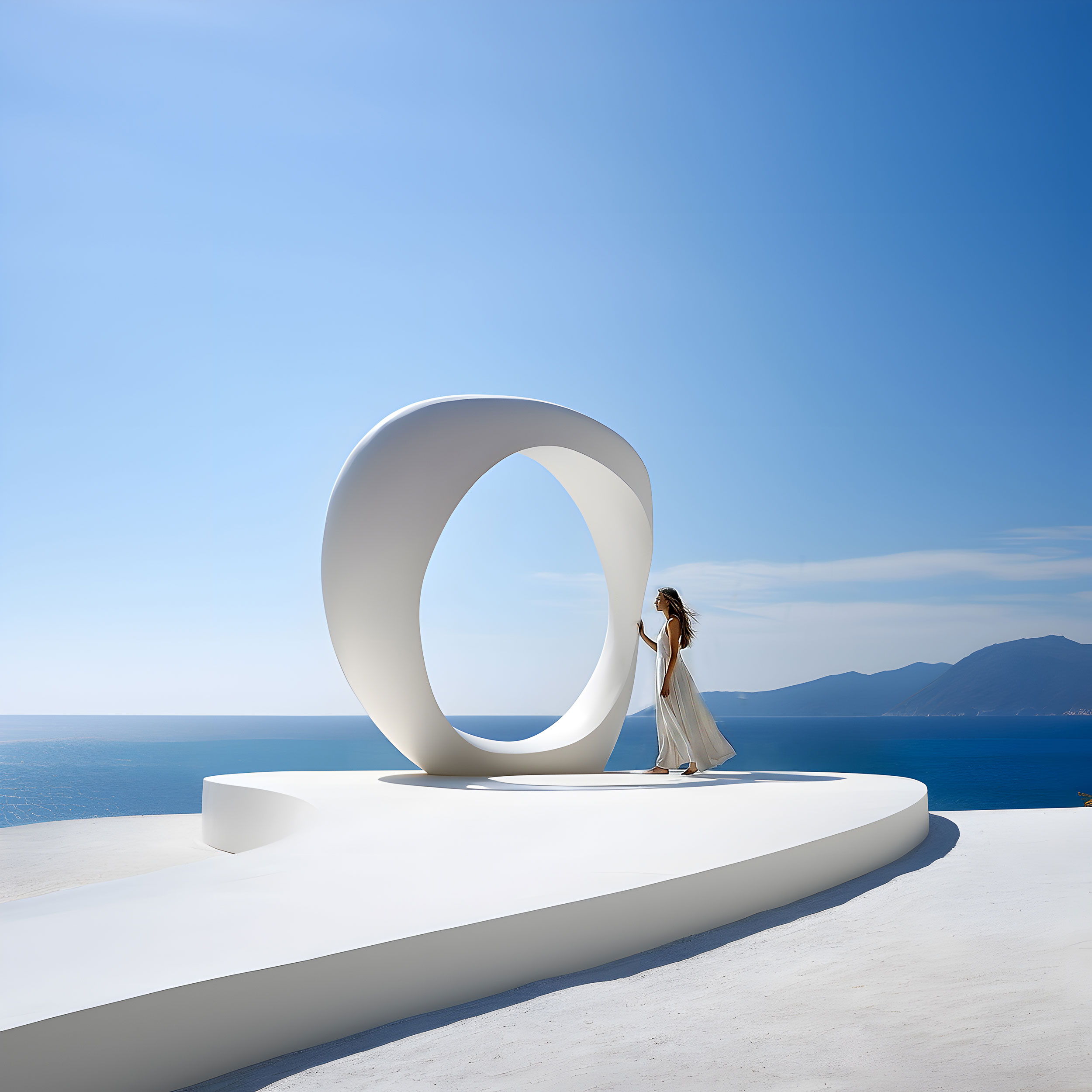
In an extensive interview, Spanish sculptor Verónica Mar discusses UNIVERSO in Madrid, her evolution from sculptural furniture to monumental portals, and the relationship between form, space and the invisible.