LATEST NEWS:
Jenny Holzer & Andy Goldsworthy win 2026 Praemium Imperiale • €9m Renoir museum heist in France • Dimitris Daskalopoulos donates 51 works to museums in Greece & Scotland • Artist Lucien Smith dies aged 37 • Faro Santander opens with 1,000-work collection • Argentina orders return of Nazi-looted Old Master • Greece rejects Parthenon Marbles loan request • Smithsonian chief Lonnie Bunch announces retirement
Go Back
Magazine

Lucio Fontana in Hong Kong: What Collectors Should See Beyond the Slash

Lucio Fontana’s slash became one of post-war art’s most recognisable gestures. A major Hong Kong exhibition restores the holes, shaped canvases, bronzes and spatial thinking that make one cut very different from another.

Exhibitions
Exhibitions
Lucio Fontana in Hong Kong: What Collectors Should See Beyond the Slash

Lucio Fontana’s cut canvas is one of the most instantly recognisable gestures in post-war art, which is precisely why it is so easy to stop looking at it. A slash can become a logo: one clean incision, a monochrome field, the name Fontana. The new Hong Kong exhibition Spatialism. Pioneering the Contemporary is valuable because it restores everything that shorthand leaves out.

Opening on 17 September and running through 19 December 2026 at Hauser & Wirth Hong Kong, the exhibition is curated by Luca Massimo Barbero in collaboration with Fondazione Lucio Fontana. It begins with the Buchi—the holes Fontana started making in 1949—and moves through the celebrated Tagli, the shaped Quanta and the roughly worked bronze Nature sculptures. The result is not a parade of famous slashes. It is an argument about how one artist spent two decades trying to make an artwork occupy real space.

Before the cut came the hole

The Buchi matter because they prevent the story from becoming too neat. Fontana did not suddenly discover the knife at the end of the 1950s and invent a style. From 1949 onward he was already puncturing surfaces, testing what happened when the picture plane stopped pretending to be a self-contained world. A hole was both an act on a material object and an opening into actual depth.

That distinction is fundamental. Fontana’s language of infinite space can sound grandly metaphysical when separated from the objects themselves. In front of a punctured paper or canvas, the idea becomes practical. Light changes at the hole. Shadow appears around an edge. The wall behind the work becomes implicated in what the viewer sees. Painting stops being only an image and starts behaving like an object in a room.

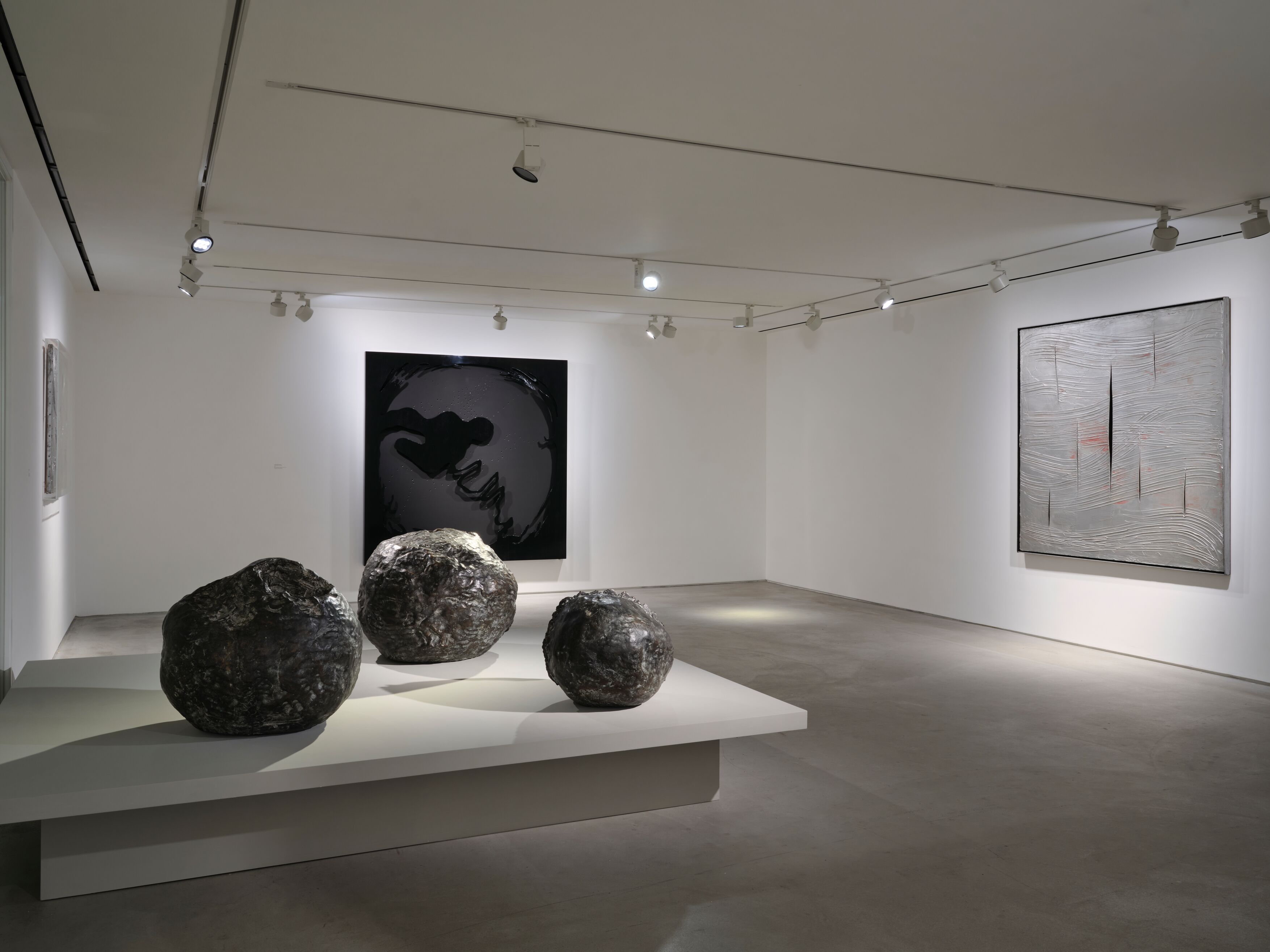
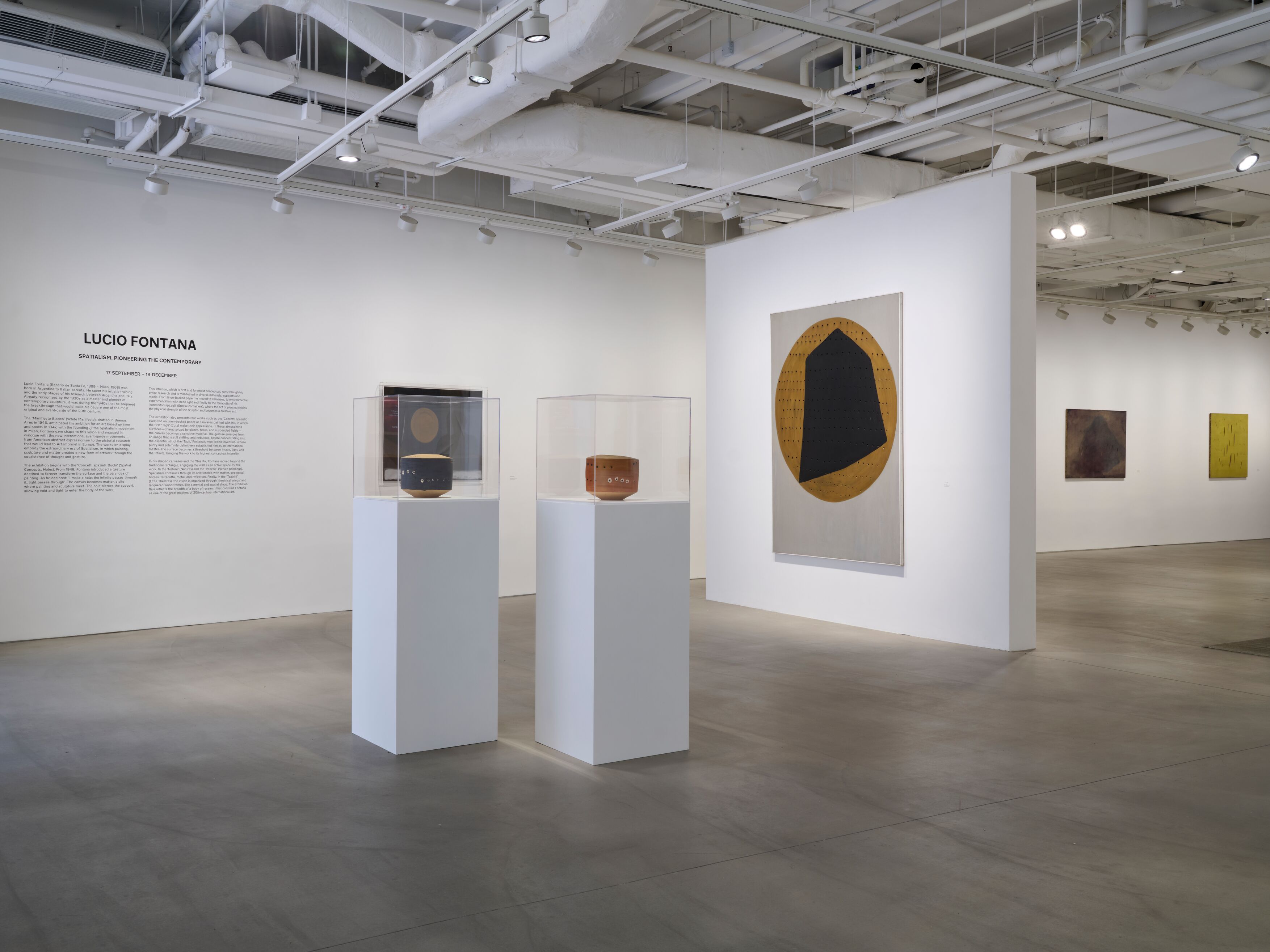
Lucio Fontana Spatialism exhibition installation view in Hong Kong
Installation view, Lucio Fontana: Spatialism. Pioneering the Contemporary, Hauser & Wirth Hong Kong, 2026. Courtesy Hauser & Wirth and Fondazione Lucio Fontana.

The Hong Kong exhibition includes an early and unusual perforated paper on canvas, alongside terracotta spatial constructions in which painting and sculpture become difficult to separate. For collectors, those works are especially instructive because they show that Fontana’s innovation was not a single successful motif but a sustained attempt to undo categories.

The cut is not a symbol; it is an event

By the late 1950s, Fontana’s experiments led to the Concetti Spaziali, Attese—the works commonly called the Tagli. Their elegance can disguise their physicality. A cut is not painted onto the surface. It has happened to the surface. The canvas has been prepared, opened and then carefully controlled so that the incision reads as both gesture and space.

This is why reproductions can flatten the experience. On a screen, two black slits may look like graphic marks. In person, the opening has depth; the surrounding paint catches light; the dark space behind the cut is not identical from every angle. The viewer becomes aware that the canvas has a front, a back and an interior.

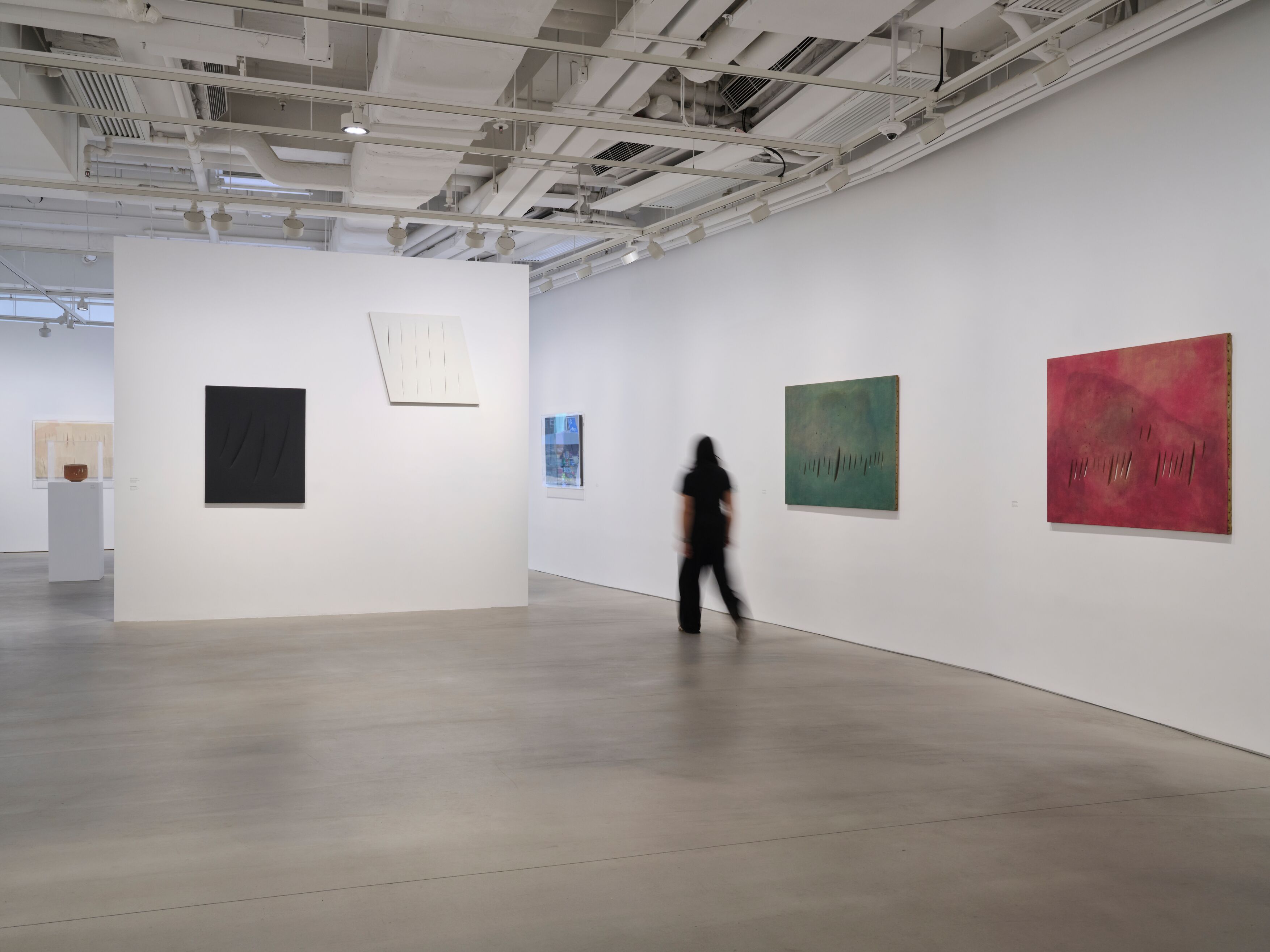
Lucio Fontana Quanta and Tagli installation view
Installation view showing Fontana’s shaped Quanta alongside slashed canvases in Hong Kong. Courtesy Hauser & Wirth and Fondazione Lucio Fontana.

For collectors, this is also why apparently similar Tagli should not be treated as interchangeable units. Number of cuts, rhythm, orientation, colour, scale, surface treatment and the relation between incision and field can change a work substantially. A single cut can feel severe and concentrated; a sequence can create cadence; metallic surfaces can turn the surrounding room into part of the picture.

What to compare when looking at a Taglio

The first question should be composition rather than celebrity. Does the incision activate the field or merely sit inside it? How much tension exists between the cut and the edges of the canvas? Does colour intensify the spatial effect or become the main event? The best works make the slash feel inevitable only after one has seen it.

The second question is material condition. Fontana’s surfaces can be deceptively spare, which makes small changes unusually visible. Canvas tension, paint surface, restorations around the cut, backing material and handling history deserve close attention. A minimalist-looking object can require very non-minimal due diligence.

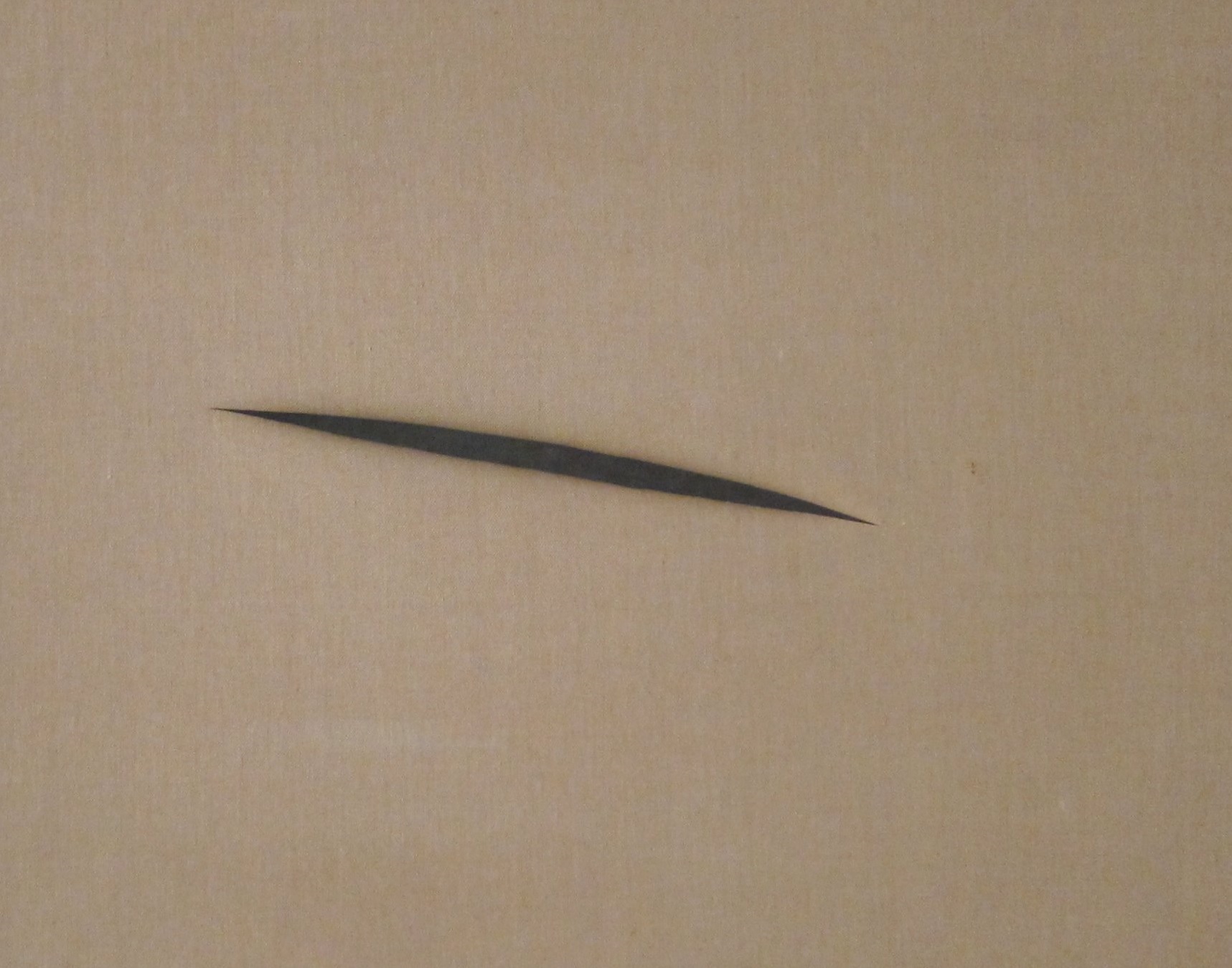
Lucio Fontana Spatial Concept Waiting 1960 cut canvas
Lucio Fontana, Spatial Concept ‘Waiting’, 1960. Context image of a single-cut canvas. Photo via Wikimedia Commons; artwork © Fondazione Lucio Fontana.

The third question is documentation. Fontana is an artist for whom titles, dates, series and provenance materially affect scholarly understanding. Serious buyers should insist on a clear documentary history and should not let visual familiarity substitute for research. A famous gesture is exactly the kind of territory in which precise cataloguing matters most.

Quanta: when the picture leaves the rectangle

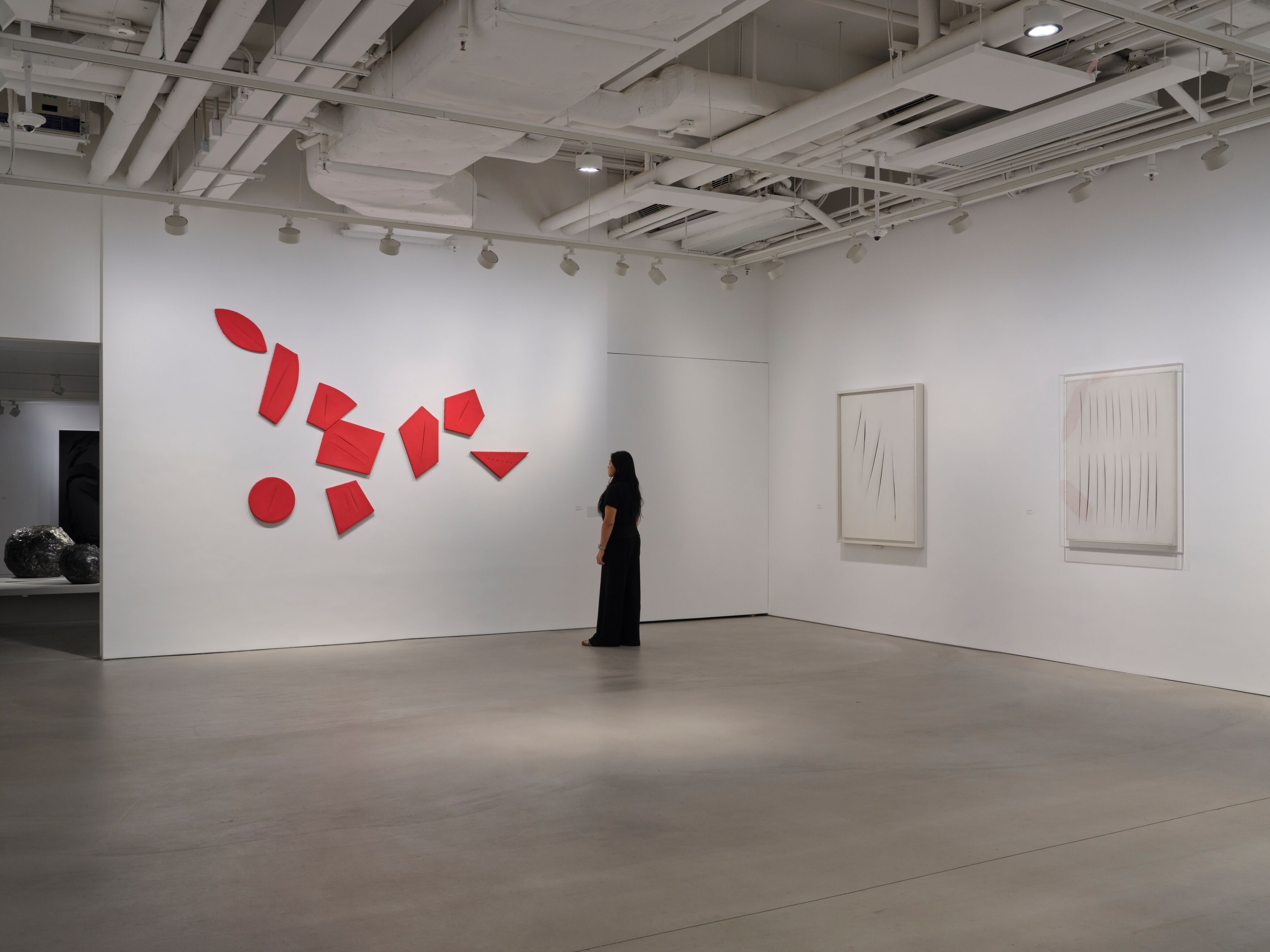
The Quanta, made around 1959–60, make Fontana’s spatial ambition even clearer. These are shaped canvases—slashed or sometimes perforated—that can be arranged as groups across the wall. Their irregular outlines break the assumption that the artwork is a fixed rectangle with a single centre.

In Hong Kong, the red Quanta read almost like fragments released from one picture and allowed to occupy architecture. Negative space between them becomes active. The wall is no longer background; it is part of the composition. That makes the works unexpectedly contemporary beside later installation practices and the American shaped canvas.

For a collector, a multi-part work introduces another layer of responsibility. Installation diagrams, spacing and orientation matter. If the work depends on the intervals between components, those intervals are not merely decorating choices. They belong to how the piece exists.

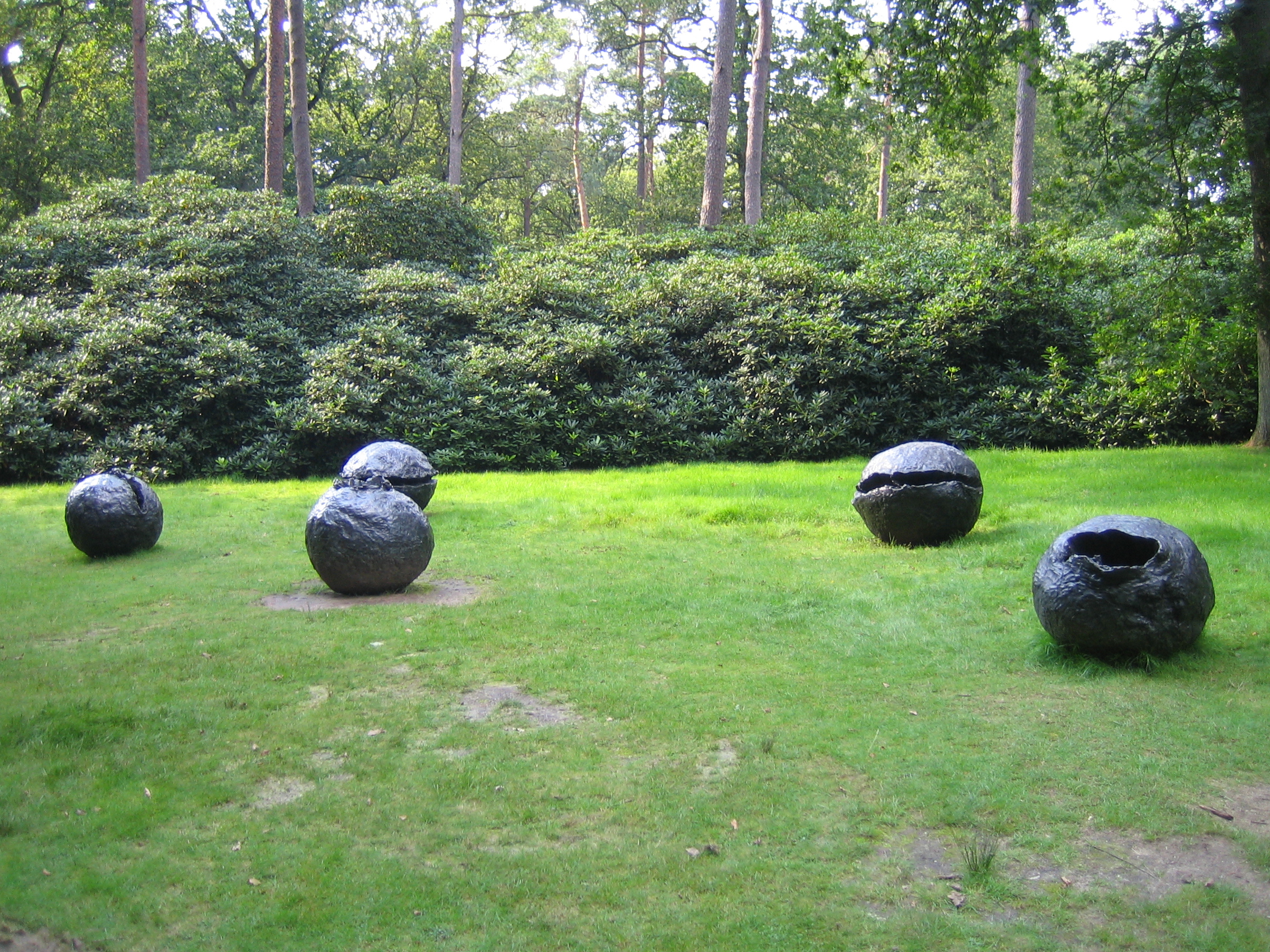
Lucio Fontana Nature bronze sculptures
Lucio Fontana’s Nature sculptures in an outdoor installation. Context photograph via Wikimedia Commons.

The bronzes are the corrective to the ‘slash’ cliché

The Nature sculptures are among the strongest reasons to see the exhibition as a whole. Conceived around 1959–60, the bronze forms resemble planets, seeds, meteorites or rough geological bodies. Fontana modelled, pressed and punctured them with obvious physical force. They make the same spatial argument as the canvases through completely different means.

Placed beside the Tagli, the bronzes clarify that Fontana never abandoned sculpture. He was asking what matter could do when it was treated as active rather than inert. A cut canvas and a wounded bronze sphere may look unrelated, but both make absence—hole, void, opening—part of the object.

That matters to collectors because an artist’s market can over-concentrate attention on the most recognisable body of work. The Nature series, early ceramics, works on paper and environmental projects widen the story. They are not secondary because they lack the familiar slash. In many cases they explain why the slash mattered.

Why Hong Kong is more than another Fontana survey

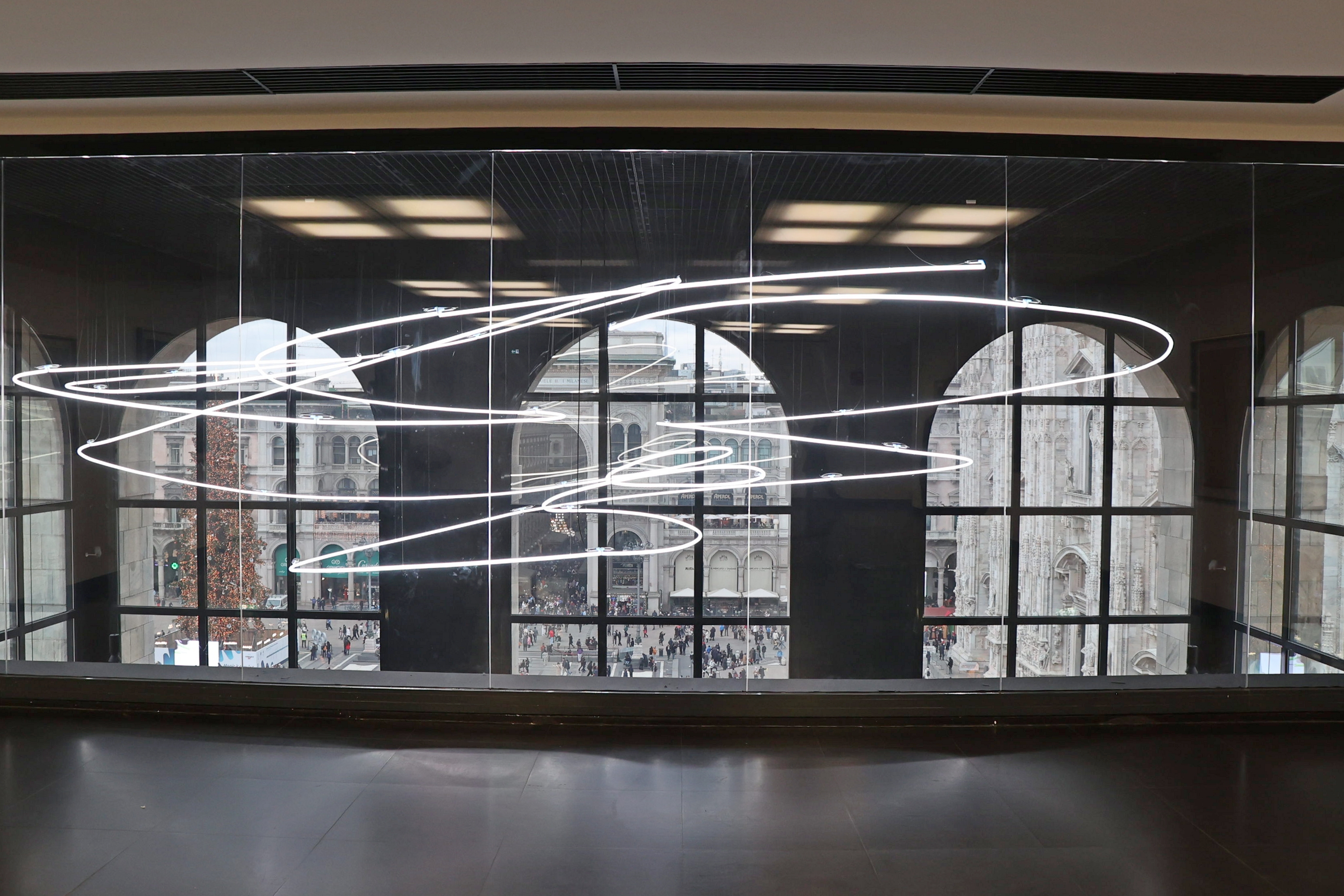
Lucio Fontana room Museo del Novecento Milan
Lucio Fontana installation at the Museo del Novecento, Milan, showing how light and real space extend his Spatialist argument beyond the canvas. Photo: Monica Rondoni, CC BY-SA 4.0.

This exhibition closes a trilogy of Hauser & Wirth presentations developed with the Foundation and Barbero, following Los Angeles in 2020 and New York in 2022–23. The Hong Kong chapter has a different emphasis: the evolution of Spatialism through the Buchi and Tagli, placed beside Quanta and Nature works.

Its location is also significant. A new monograph published for the exhibition is described by the gallery as the first widely available introduction to Fontana’s practice in Simplified Chinese. For an artist whose canonical status in Europe and the United States can sometimes make his work feel over-familiar, the publication acknowledges a different audience and a different art-historical entry point.

The useful collector lesson is therefore not that Fontana is important—we already know that. It is that familiarity is a poor substitute for discrimination. The slash became iconic because it condensed a much larger investigation of material, light and space. The more carefully one sees those differences, the less interchangeable the works become.

Exhibition information

Lucio Fontana: Spatialism. Pioneering the Contemporary is at Hauser & Wirth Hong Kong from 17 September to 19 December 2026.

Date
Sep 21, 2026
Share

Latest Posts

September 21, 2026
Exhibitions
Exhibitions
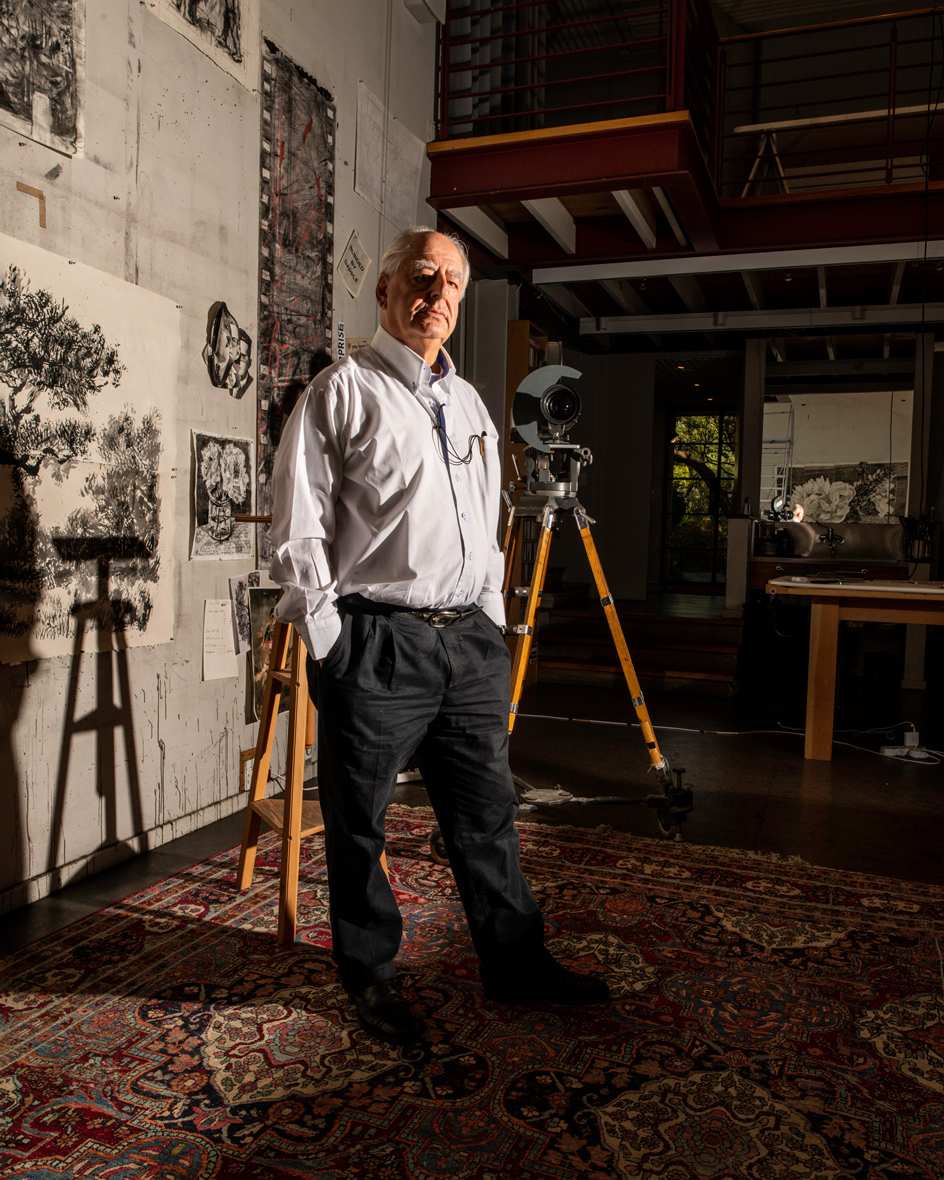
William Kentridge and the City That Cannot Stop Being Erased

Ahead of the global premiere of William Kentridge’s twelfth Drawings for Projection film at Goodman Gallery London, we look at why charcoal, erasure and revision remain central to the artist — and what collectors should understand across drawings, prints, film and sculpture.

September 21, 2026
Exhibitions
Exhibitions
Frieze Sculpture 2026 Reviewed: What Happens When Sculpture Leaves the White Cube

Frieze Sculpture 2026 turns The Regent’s Park into a live test of scale, material, siting and weather. For collectors, the strongest lesson is not which work 'wins' — but what outdoor presentation reveals that the white cube can hide.

September 21, 2026
Exhibitions
Exhibitions
Lucio Fontana in Hong Kong: What Collectors Should See Beyond the Slash

Lucio Fontana’s slash became one of post-war art’s most recognisable gestures. A major Hong Kong exhibition restores the holes, shaped canvases, bronzes and spatial thinking that make one cut very different from another.