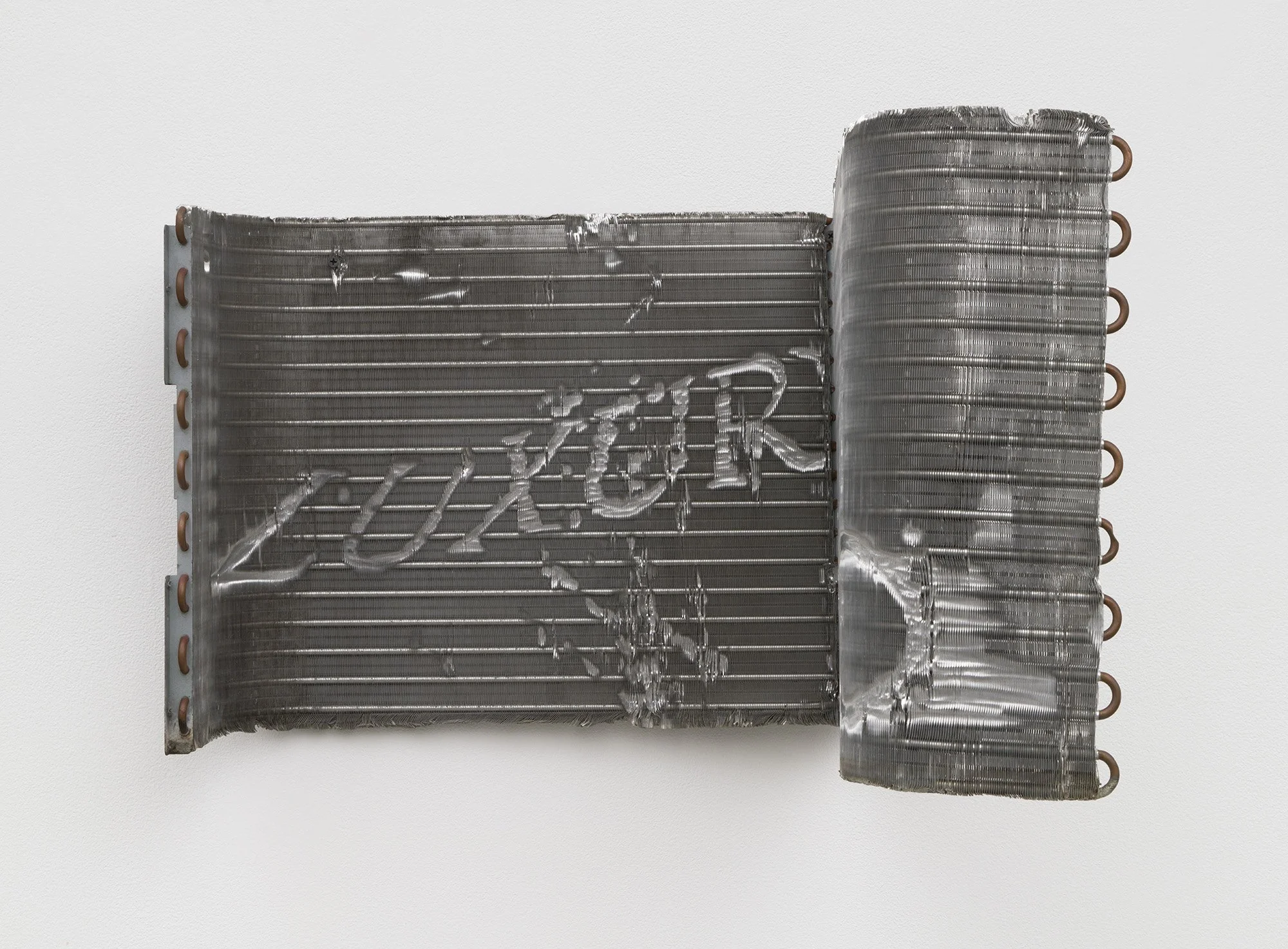

Alix Vernet sees the backs of New York air conditioners as archives: fragile aluminum surfaces that record weather, maintenance, touch and heat exchange. LANDMARKS turns overlooked infrastructure into some of the city’s strangest new monuments.
More Than a Backdrop: Becky Gochman’s Telluride Home and the Responsibilities of Collecting Living Indigenous Art
Becky Gochman’s Telluride retreat is both a family home and one node in an active lending collection—raising a richer question about how collectors can live with contemporary Indigenous art without turning it into décor.

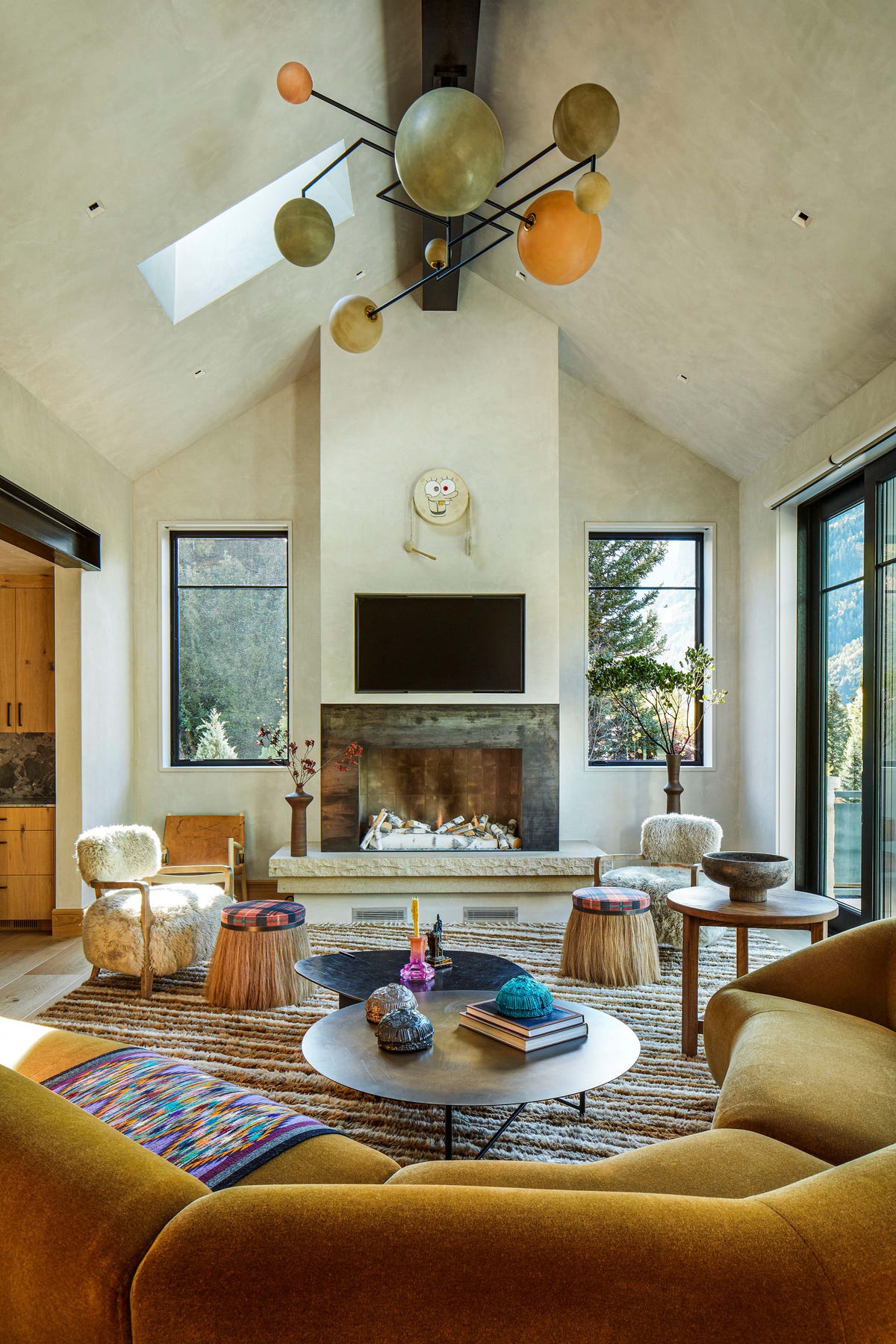
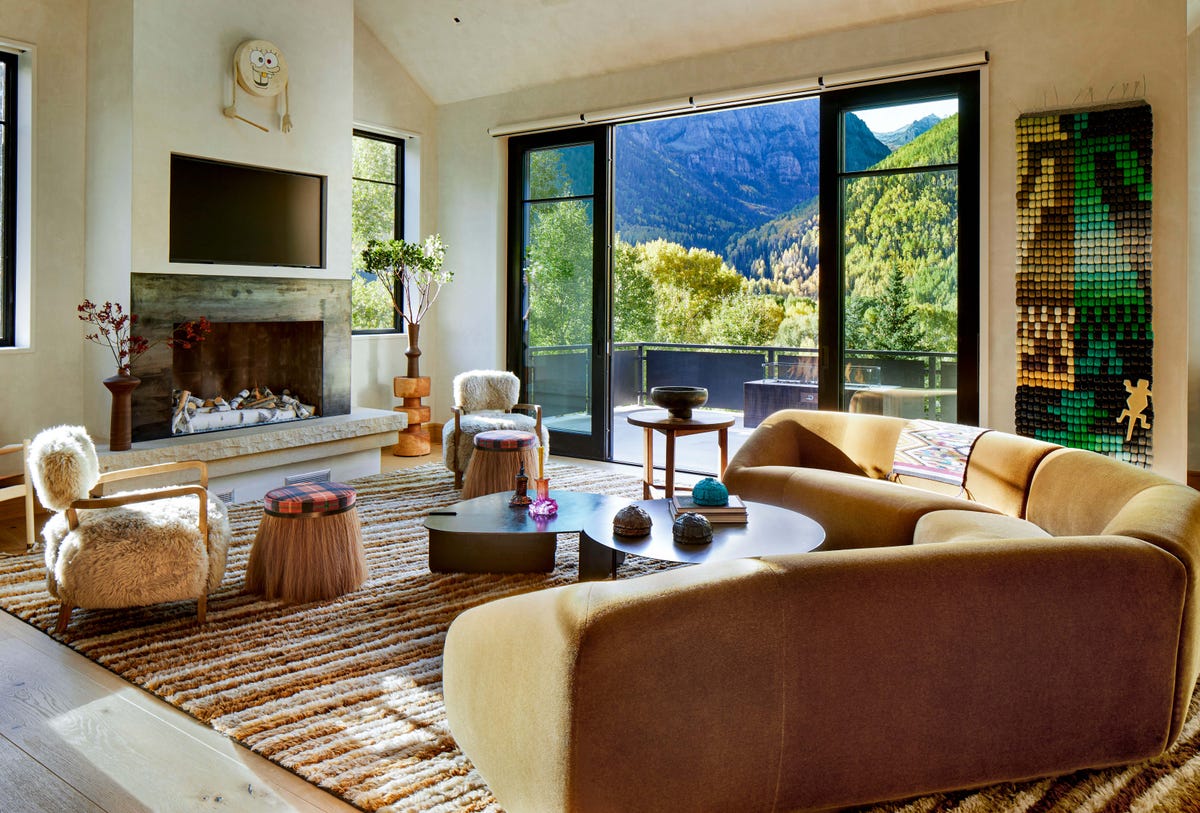
A collector home can make a collection look private even when the collector’s larger ambition is public. That tension is particularly interesting in Becky Gochman’s Telluride house. The six-bedroom retreat is unquestionably a family home: bedrooms have individual personalities, materials respond to the Colorado landscape and the rooms are designed for repeat visits rather than institutional circulation. Yet the art belongs to a collection structured around movement.
Gochman’s family collection is a lending collection focused on contemporary Native art. Its stated mission is to deepen global understanding of contemporary Indigenous creative expression and to support artists whose work challenges colonial worldviews and dominant historical narratives. The collection now comprises more than 750 works and operates a fee-free lending programme that, according to its own current figures, has placed more than 260 works in over 100 exhibitions worldwide. The Telluride house matters because it shows what that philosophy looks like domestically.
The home is not the collection’s final destination
ELLE Decor reports that roughly sixty per cent of the collection is on public display at any given time, with Gochman saying the aim is to increase that percentage. Works rotate out of the house for exhibition, scholarship and institutional loans, including to major museums. That makes the home less a vault than a temporary configuration.
This distinction is fundamental. Collectors often speak about stewardship, but stewardship becomes meaningful when it changes behaviour. A work that is regularly lent needs documentation, current condition reporting, professional packing, clear rights information and a willingness to tolerate blank walls when it leaves. A collection designed for circulation cannot be curated as a permanent interior composition.
The Telluride house therefore has to absorb absence. The artwork visible in photographs is not a definitive hang; it is one moment in a changing system. That gives the interior a useful looseness. Sasha Bikoff’s design can be characterful without relying on one trophy picture to complete a room.
The same principle distinguishes a lending collection from a collection that merely contains important loans in theory. Visibility becomes an operational goal. Research and exhibition requests are not interruptions to domestic ownership; they are part of the collection’s purpose.

Living Indigenous art cannot become a décor category
The visual strength of the house creates a critical responsibility. Contemporary Indigenous art can easily be absorbed into the lifestyle language surrounding the American West: craft, landscape, materiality, authenticity, place. That vocabulary may sound appreciative while flattening radically different artists, nations, practices and political positions into a decorative identity.
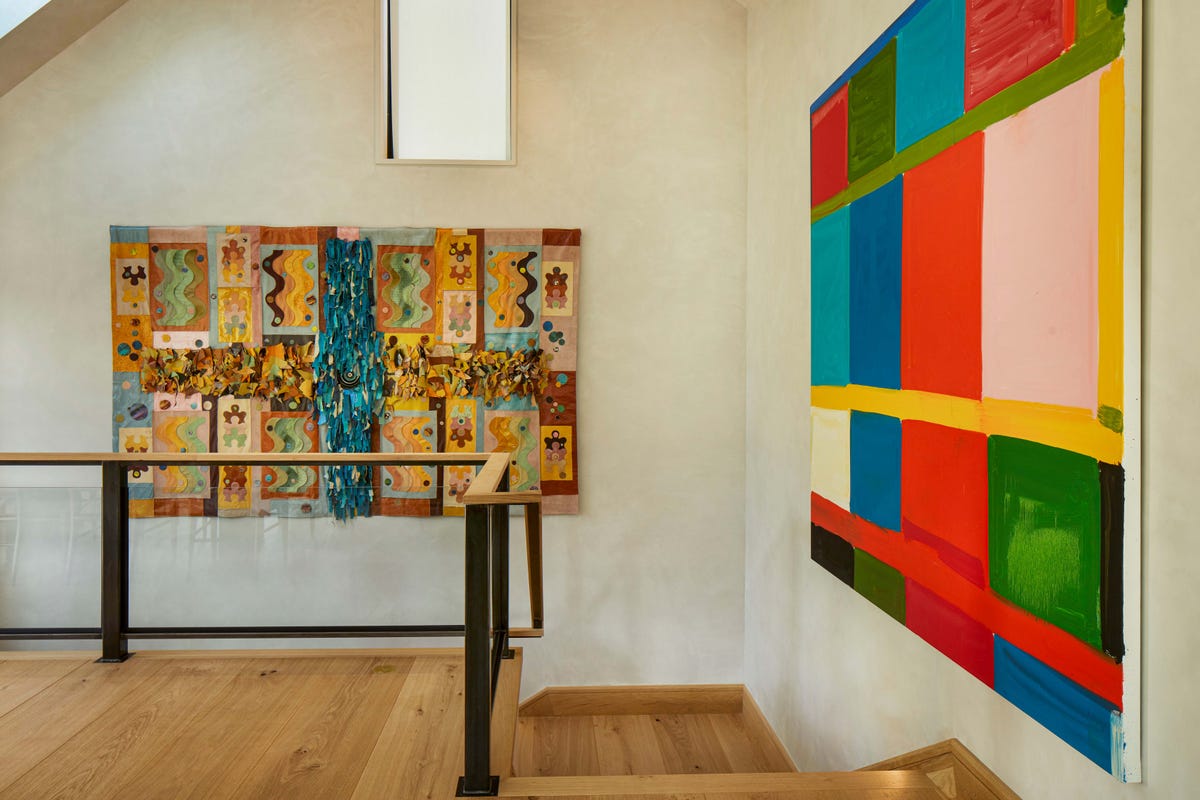
The Telluride project is strongest where it refuses that flattening. Ishi Glinsky’s Thinking About the Journey #2, for example, uses cast skateboard wheels to evoke oversized beadwork, moving between contemporary material culture and forms of making associated with Indigenous histories. Tau Lewis’s Return of the Martian Water God is built through found materials and hand sewing, yet its meaning cannot be reduced to texture or ‘craft’. Sara Siestreem, Irveta Aragon and other artists in the house likewise arrive with distinct cultural and conceptual frameworks.
A serious collector therefore has to resist the phrase ‘Indigenous aesthetic’. There is no single one. The useful category is institutional and historical: artists who identify with particular Indigenous nations and communities, and whose work may engage sovereignty, language, land, representation, colonial histories, abstraction, family, humour or subjects that do not exist for non-Indigenous audiences to classify neatly.
The responsibility is not to make Indigenous art feel at home in a Western interior. It is to make sure the interior does not reduce the art to an idea of the West.
Restraint can be an ethical design decision
Bikoff is known for maximal interiors, which makes the project’s restraint more revealing. Instead of antlers, plaid, taxidermy and the familiar visual shorthand of a mountain retreat, she developed a tone-on-tone palette drawn from streams, stone, aspen groves and sky. Rooms have colour identities, but the palette behaves more like atmosphere than theme.
That decision matters because the collection itself can be visually assertive. Strong colour and complex material do not require neutral white walls, but they do require an interior confident enough not to compete for narrative attention. A collector home can be richly designed while refusing to turn every artwork into an accessory in a larger decorative story.
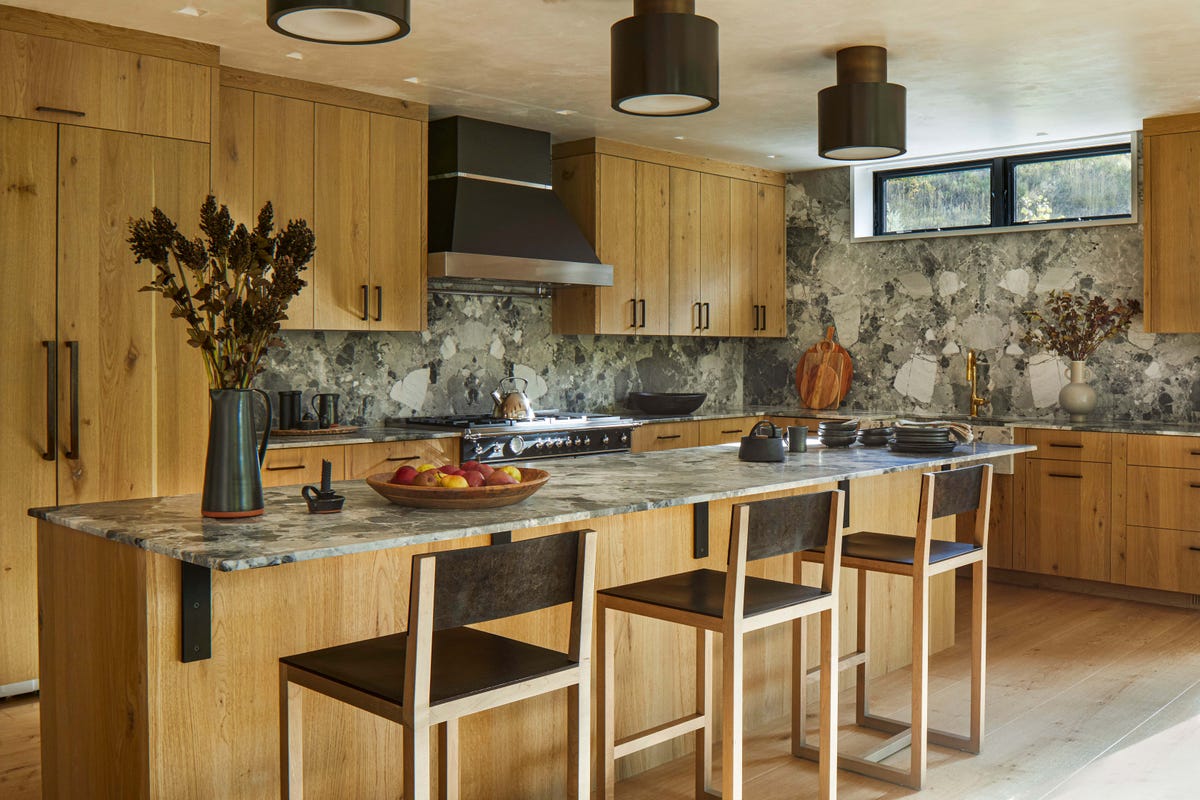
The kitchen demonstrates the principle without art needing to dominate every photograph. Ceppo Bianco stone recalls pebbles and riverbeds; wood and glass keep the material language connected to place. The house has an identity even when a major work is travelling. That is exactly what a lending collection requires.

The collection extends beyond ownership
The Gochman Family Collection’s public mission also includes research, direct artist support and programming. That infrastructure helps explain why the Telluride property includes a guest-house loft where visiting artists can stay and work. A collector home becomes more culturally interesting when it can host production and conversation rather than only display finished objects.
There is a distinction, however, between access and intimacy. A private house does not become a public institution simply because artists visit or works travel. Nor should it necessarily. The useful model is porous rather than fully open: the private setting supports relationships that extend beyond itself.
That porosity can change the collector’s role. Instead of asking only which work should be acquired, the collector begins asking what circumstances allow an artist’s work to be seen, studied and contextualised properly. Loans, publications, institutional introductions and research support can become as consequential as the purchase itself.
For collectors building around historically underrepresented practices, this is particularly important. Market demand can rise much faster than scholarship. Acquiring quickly without supporting documentation or public visibility can reproduce the same imbalance that made the work underrepresented in the first place: private enthusiasm without a durable public record.
Why the landscape still matters—but differently
Telluride’s mountains are unavoidable. The house opens toward an extraordinary view corridor, and Bikoff’s material palette repeatedly draws from the landscape. But this should not become another story about sculpture ‘communicating with nature’. The more interesting relationship is between place and historical imagination.
The mythology of the American West has frequently marginalised or erased Indigenous presence even while borrowing Indigenous imagery as proof of regional authenticity. A contemporary Indigenous collection in a Colorado mountain town therefore sits inside a charged visual geography. The paintings, sculptures and textiles are not simply enhanced by the mountains behind them. They complicate what the landscape is allowed to mean.
That complication is positive. The best collector homes do not make every relationship harmonious. They allow art to interrupt inherited narratives about luxury, region and taste. The Telluride house may look serene, but the collection can make the serenity intellectually unstable.

A house designed for rotation
Rotation is often treated as a practical response to owning more art than walls. Here it becomes closer to a curatorial principle. If works are continually leaving for public exhibitions and returning, the collector is forced to reconsider relationships. A room becomes new when one object departs. Another artist may gain space. A piece that felt secondary can become central.
This is one reason domestic collections can remain intellectually alive longer than fixed displays. The collector is repeatedly asked to edit. The architecture becomes a framework for changing conversations rather than a final installation.
The house’s six bedrooms, each given a distinct atmosphere, make that changeability visible at a smaller scale. Guests can return and occupy different rooms; artworks complete or disrupt those environments differently. It is a reminder that living with art produces knowledge through repetition. A work seen every morning is encountered under conditions no museum can reproduce.
The collection’s scale also changes the meaning of acquisition. With more than 750 works, no individual purchase can be justified simply because it fills an obvious gap on a wall. Each new object enters an existing network of artists, loans, research and institutional relationships. That encourages a more demanding question: what can this work contribute to the collection’s public argument that another acquisition cannot? Scale should increase selectivity rather than reduce it.
For other collectors, the useful lesson is not that a private collection needs hundreds of works or a global loan programme. Even a smaller collection can adopt the same principle by documenting artists carefully, responding thoughtfully to museum requests, sharing scholarship and allowing important works to circulate when a serious curatorial reason exists. Public value is not produced by collection size alone; it is produced by what ownership enables.

Collector Home Notes
Collector: Becky Gochman / Gochman Family Collection.
Location: Telluride, Colorado.
Interior design: Sasha Bikoff; construction by FINBRO, with architect Tommy Hein referenced in the published project.
Collection mission: contemporary Native art, artist support, research and fee-free institutional lending.
Current collection scale: more than 750 works; the collection reports more than 260 works placed in over 100 exhibitions worldwide.
Domestic principle: the hang is deliberately temporary because works rotate for exhibitions and scholarship.
Image rights: David Marlow’s ELLE Decor photography is copyrighted and requires publication clearance.
The strongest lesson from Telluride is therefore not a design recipe. It is a collecting structure. A private home can be deeply personal without becoming the final destination of what it contains. Art can leave, return, enter scholarship and acquire new public histories without losing its domestic intimacy.
That is a more demanding form of ownership. It also makes the house feel less like the endpoint of collecting and more like one address in a much larger cultural circulation.
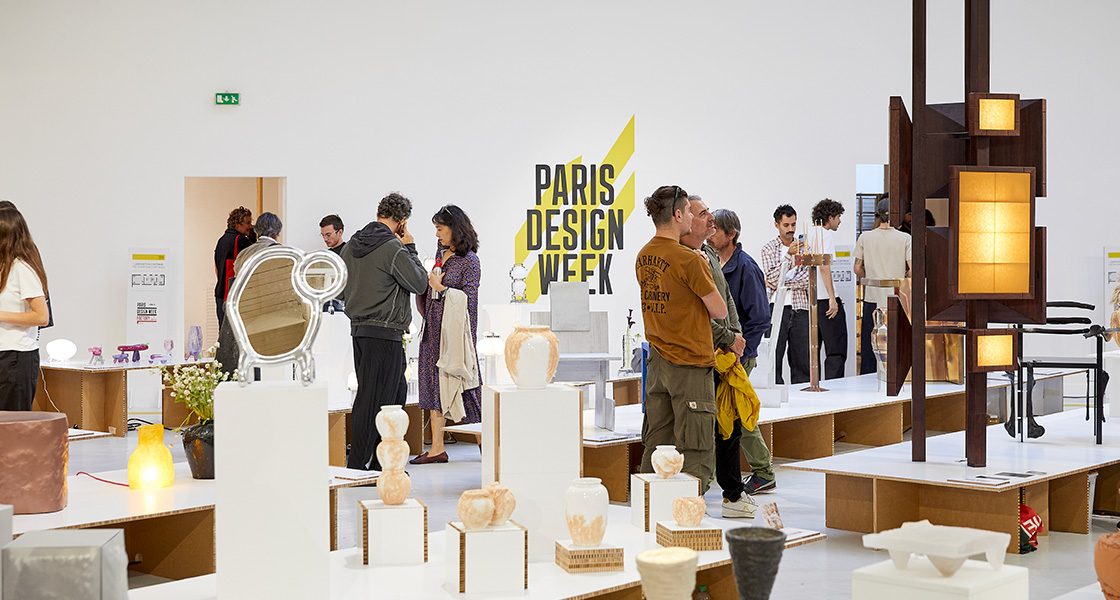
Paris Design Week is too large for a checklist. Our collector’s edit focuses on the places where collectible design, exceptional craft and historic interiors create the strongest opportunities for serious looking and collecting.
Becky Gochman’s Telluride retreat is both a family home and one node in an active lending collection—raising a richer question about how collectors can live with contemporary Indigenous art without turning it into décor.